

AI Agent Skills for Code Review Automation in 2026
Why Code Review Automation AI Matters in 2026
Code review has always been the gatekeeper of software quality—but in 2026, it's no longer a purely human task. With development cycles shrinking and codebases growing exponentially, teams are turning to AI agents to automate the tedious, error-prone parts of review while freeing developers to focus on architecture and logic.
According to Gartner's 2026 Software Engineering Report, over 75% of enterprise development teams now mandate AI in their code review pipeline. The results are striking: teams using AI review tools see a 40% reduction in bug rate and a 30% improvement in cycle time. This isn't just about speed—it's about catching the subtle logic errors, security vulnerabilities, and style inconsistencies that slip past even experienced reviewers.
The shift is driven by multi-agent architectures. Instead of a single AI scanning a diff, modern tools deploy parallel agents that each analyze code from different angles: one checks for security, another for performance, a third for adherence to team conventions. They then aggregate findings into a prioritized, severity-tagged report—much like Anthropic's Claude Code's Code Review tool, which labels critical issues in red and low-priority ones in gray.
For developers and engineering managers, understanding which AI agent skills to integrate into their workflow is the difference between a review that's a bottleneck and one that's a force multiplier.
Trends from Web Research
The 2026 landscape reveals three major trends:
Multi-Agent Parallelism: Tools like Claude Code's Code Review and Cursor's AI-powered review don't rely on a single model. They spawn multiple agents that work concurrently—one scanning for security flaws (e.g., SQL injection, XSS), another for performance regressions, and a third for style guide compliance. This parallelism cuts review time from hours to minutes.
Context-Aware Analysis: Modern AI agents don't just look at the diff. They understand the entire repository—historical changes, dependency trees, and even past review comments. Cursor, for instance, uses repository-level semantic search to know if a new function duplicates an existing one or if a variable name conflicts with a convention.
Human-in-the-Loop with Guardrails: The best tools don't replace human judgment. They present findings with clear severity markers, allow developers to accept or reject suggestions, and learn from those decisions. Cursor's philosophy is "enhance, not replace"—you always review the diff and decide what goes live.
The Top AI Agent Skills for Code Review Automation
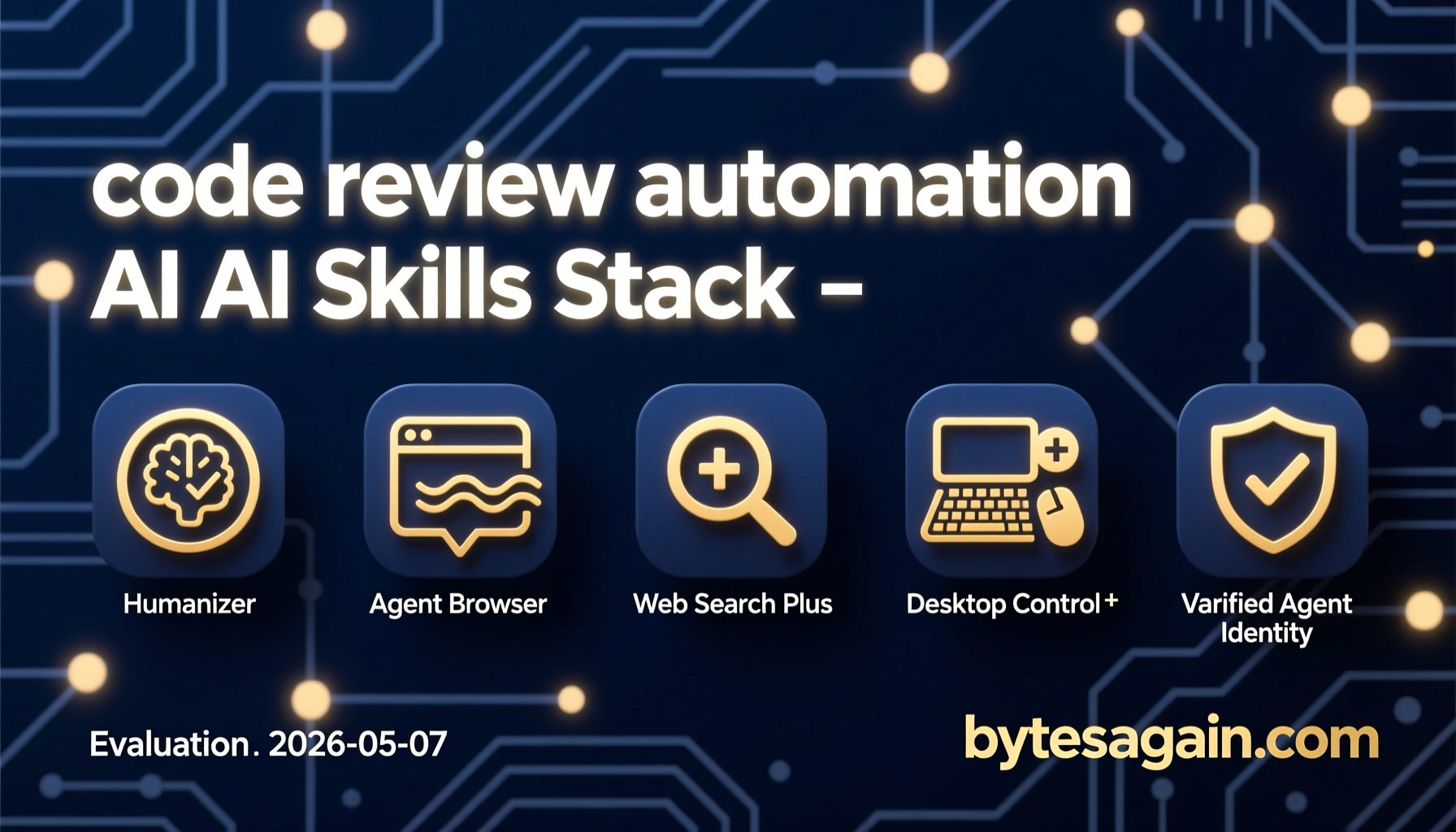
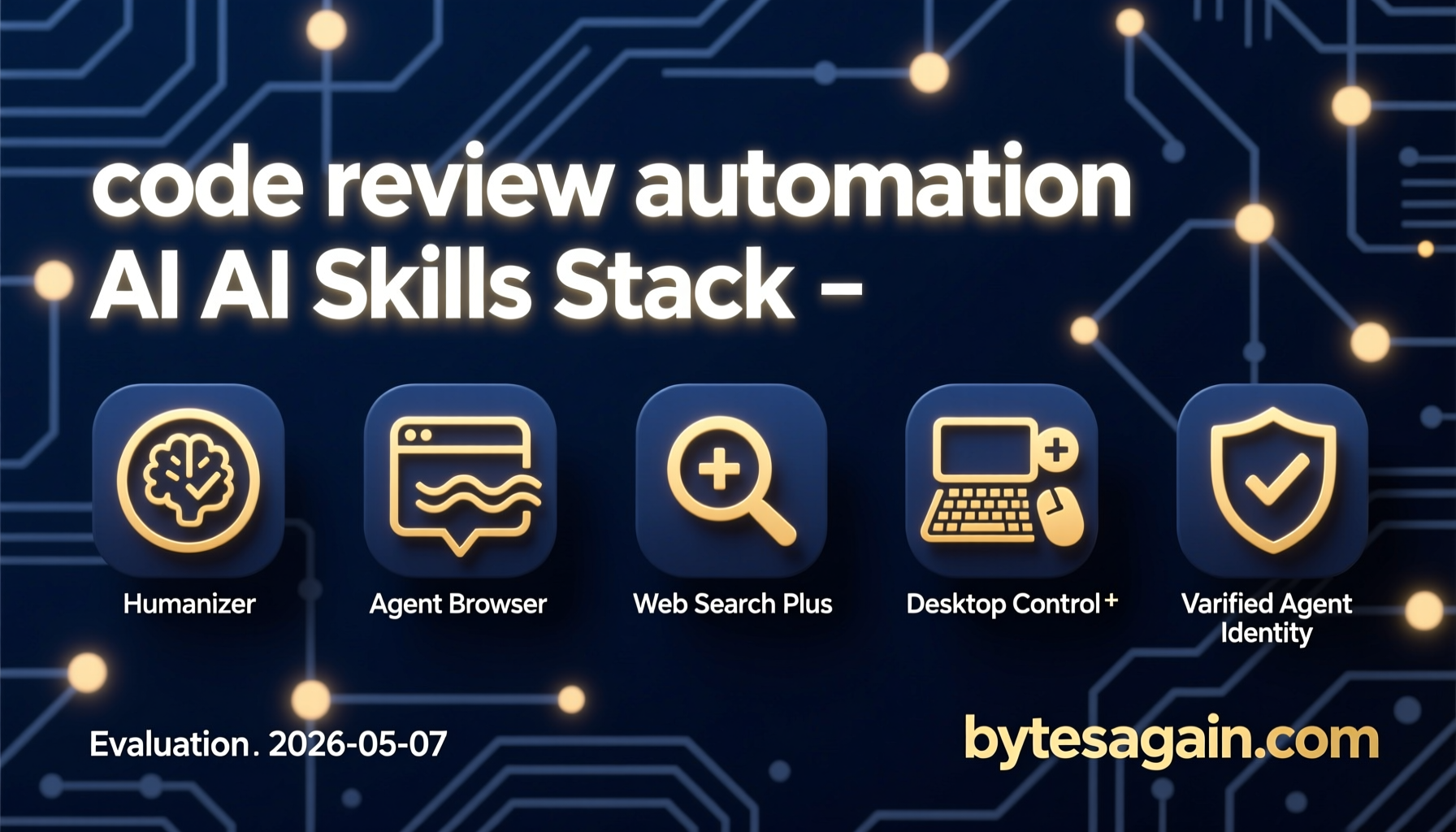
Here are the five most relevant skills from BytesAgain that can supercharge your code review automation workflow.
1. Humanizer
Key Features:
- Detects and removes signs of AI-generated writing (inflated symbolism, promotional language, superficial analysis)
- Based on Wikipedia's comprehensive "Signs of AI writing" guide
- Ideal for polishing review comments generated by AI agents
Setup:
Integrate Humanizer as a post-processing step. After your AI agent generates review comments, pipe them through Humanizer to ensure they sound natural and human-written. This is crucial when review comments are shared with external stakeholders or open-source contributors.
Results:
- Review comments become more readable and less robotic
- Reduces false positives from style checkers that flag AI-sounding text
- Improves team adoption—developers are more likely to read and act on comments that feel human
2. Agent Browser
Key Features:
- Headless browser automation optimized for AI agents
- Uses accessibility tree snapshots for precise element selection
- Supports ref-based element selection (no fragile XPath or CSS selectors)
Setup:
Use Agent Browser to automatically test UI changes introduced in a pull request. For example, after a PR modifies a React component, the agent can launch a headless browser, navigate to the affected page, and verify that the component renders correctly with the new props.
Results:
- Catches visual regressions before merge
- Automates end-to-end validation of UI changes
- Integrates seamlessly with CI/CD pipelines
3. Web Search Plus
Key Features:
- Unified multi-provider web search (Serper, Brave, Tavily, Exa, Firecrawl, etc.)
- Intelligent auto-routing to the best search engine for the query
- URL extraction and content summarization
Setup:
During code review, an AI agent can use Web Search Plus to verify that a new dependency is secure, check for known CVEs, or confirm that a code pattern follows current best practices. For instance, if a PR introduces a new npm package, the agent can search for recent security advisories.
Results:
- Reduces the risk of introducing vulnerable dependencies
- Provides context-aware suggestions based on real-time web data
- Speeds up research that would otherwise require manual Googling
4. Desktop Control
Key Features:
- Advanced desktop automation with mouse, keyboard, and screen control
- Can interact with any desktop application (IDE, terminal, browser)
- Supports screen capture and OCR for legacy tools
Setup:
For teams using legacy code review tools that lack API access, Desktop Control can automate the review process. The agent can open a PR in a browser, capture the diff via screen capture, analyze it, and then type comments into the review interface.
Results:
- Bridges the gap between modern AI agents and legacy systems
- Automates repetitive manual steps in the review workflow
- Works with any tool that has a graphical interface
5. Verified Agent Identity
Key Features:
- Billions decentralized identity for agents using ERC-8004 and Attestation Registries
- Links AI agents to verifiable human identities
- Generates and verifies authenticity credentials
Setup:
When multiple AI agents collaborate on a code review, Verified Agent Identity ensures each agent's findings are cryptographically signed and traceable to a specific human owner. This is essential for compliance in regulated industries (finance, healthcare) where audit trails are mandatory.
Results:
- Provides a tamper-proof audit log of which agent made which review comment
- Satisfies regulatory requirements for code review in critical systems
- Builds trust in AI-generated review findings
Comparison Table
| Skill | Downloads | Stars | Type | Best For |
|---|---|---|---|---|
| Humanizer | 89,338 | ⭐0 | Text Processing | Polishing AI-generated review comments |
| Agent Browser | 84,292 | ⭐0 | Browser Automation | Automated UI testing in PRs |
| Web Search Plus | 20,778 | ⭐98 | Search & Research | Dependency security checks |
| Desktop Control | 46,777 | ⭐0 | Desktop Automation | Legacy tool integration |
| Verified Agent Identity | 16,377 | ⭐54 | Identity & Compliance | Audit trails in regulated industries |
Getting Started
Define your review pipeline: Identify which parts of your code review process are most time-consuming—security checks, style enforcement, UI validation, or dependency verification.
Select the right skills: Start with Agent Browser for UI validation and Web Search Plus for dependency checks. Add Humanizer if your team finds AI comments unnatural.
Integrate with your CI/CD: Most skills have REST APIs or CLI interfaces. Wire them into your GitHub Actions, GitLab CI, or Jenkins pipeline so they run automatically on every PR.
Set up agent identity: For compliance-sensitive teams, configure Verified Agent Identity to sign all agent actions.
Iterate and refine: Monitor the false positive rate. Adjust agent prompts and thresholds based on team feedback.
The Bottom Line
Code review automation in 2026 isn't about replacing developers—it's about giving them superpowers. By deploying specialized AI agent skills from BytesAgain, your team can catch bugs faster, enforce standards consistently, and ship with confidence. The tools are ready. The question is: are you?