

Published by BytesAgain · May 2026
Which AI Skill Dominates Competitor Intelligence? 5 Skills Compared
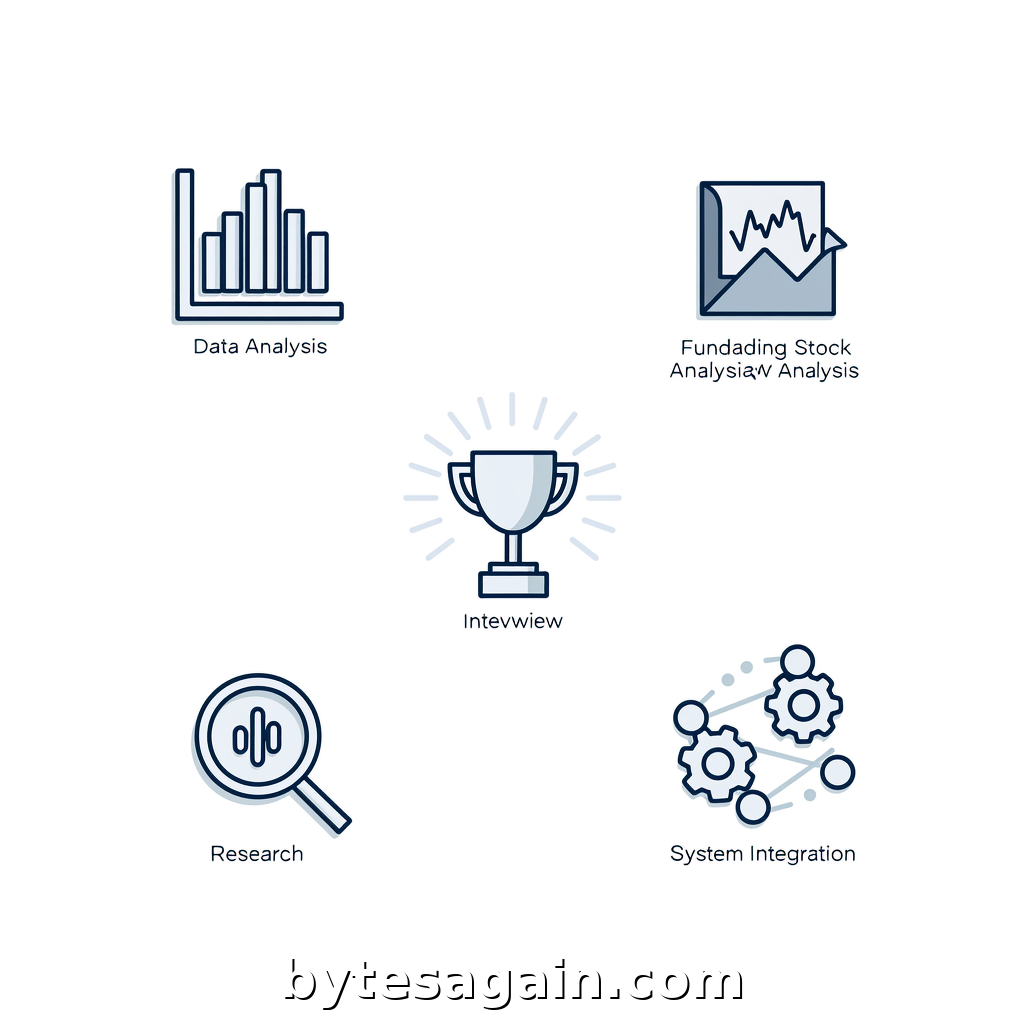
Every business needs to know what competitors are doing. But manual competitor research is slow, biased, and expensive. The Competitor Analysis AI Agent solves this by automating the collection and analysis of competitor data to deliver strategic insights. To build this agent, you need the right skill. But with five distinct options available, which one actually delivers the intelligence you need?
This article compares five AI skills designed for competitor analysis. We'll break down what each agent skill does best, where it falls short, and how to choose the right one for your specific business context.
The Five Skills: A Quick Overview
Data Analysis
The Data Analysis skill is the generalist powerhouse. It queries databases, generates reports, automates spreadsheets, and turns raw data into actionable insights. Its strength is flexibility—it works with whatever structured or semi-structured data you feed it. If you have competitor pricing spreadsheets, market share tables, or sales data, this skill processes them into clean visualizations and reports.
Fundamental Stock Analysis
The Fundamental Stock Analysis skill uses a structured scoring playbook to evaluate equities. It assesses quality, balance-sheet safety, cash flow, valuation, and sector adjustments. While designed for public companies, its peer ranking methodology translates directly to competitor benchmarking—if your competitors are publicly traded.
Interview Analysis
The Interview Analysis skill takes a different approach. It uses dynamic expert routing to analyze deep interviews, automatically selecting top domain thinkers based on role type. It distinguishes genuine capability from performance, identifying "Battle Scars" over mere credentials. This skill excels at qualitative intelligence: what competitors' leaders actually say, how they think, and where their strategic blind spots lie.
Market Analysis CN | 市场分析服务
The Market Analysis CN | 市场分析服务 skill is a bilingual (Chinese/English) market analysis service. It handles enterprise market trend analysis, competitor analysis, and user behavior insights. For businesses operating in or tracking Asian markets, this skill provides culturally and linguistically accurate analysis that Western-focused skills may miss.
Us Stock Analysis
The Us Stock Analysis skill offers comprehensive US stock analysis. It combines fundamental analysis (financial metrics, business quality, valuation) with technical analysis (indicators, chart patterns, support/resistance) and stock comparisons. This is the most specialized skill, focused exclusively on US equities.
Side-by-Side Comparison
Data handling capabilities:
- Data Analysis handles any structured data you provide—CSVs, databases, APIs, spreadsheets. It's format-agnostic.
- Fundamental Stock Analysis and Us Stock Analysis work only with public financial data. They cannot process internal competitive intelligence.
- Interview Analysis processes qualitative text from interviews, transcripts, and recorded conversations.
- Market Analysis CN handles both structured market data and Chinese-language business documents.
Output quality and format:
- Data Analysis produces charts, graphs, and formatted reports.
- Fundamental Stock Analysis generates scoring cards with peer rankings.
- Interview Analysis delivers behavioral insights and capability assessments.
- Market Analysis CN provides market trend reports with localized insights.
- Us Stock Analysis outputs combined fundamental and technical analysis reports.
Best-fit scenarios:
- Use Data Analysis when you have existing data and need to transform it into competitor insights.
- Use Fundamental Stock Analysis when your competitors are public companies with available financial filings.
- Use Interview Analysis when you have access to competitor executive interviews, earnings call transcripts, or industry conference talks.
- Use Market Analysis CN when your competitors operate in China or Asia-Pacific markets.
- Use Us Stock Analysis when your focus is strictly US-listed competitors and you need both fundamental and technical perspectives.
Limitations:
- Data Analysis requires you to source and provide the data—it doesn't gather intelligence on its own.
- Fundamental Stock Analysis and Us Stock Analysis ignore private companies, startups, and non-financial competitive signals like product launches or marketing strategies.
- Interview Analysis requires interview transcripts or recordings as input.
- Market Analysis CN is less effective for non-Asian markets and English-only content.
- Us Stock Analysis provides no competitive intelligence beyond stock performance metrics.
Real-World Scenario: The SaaS Startup
Imagine a SaaS startup preparing to enter the project management software market. They need to understand three competitors: Asana (public, US-listed), Monday.com (public, US-listed), and a fast-growing Chinese competitor, Worktile (private, China-based).
The wrong approach: Using only Us Stock Analysis or Fundamental Stock Analysis. These skills would analyze Asana and Monday.com's financial health but completely miss Worktile. They would also ignore product features, pricing strategies, and customer sentiment.
The better approach: Combine Data Analysis with Market Analysis CN. Use Data Analysis to process publicly available pricing pages, feature comparison tables, and app store reviews for all three competitors. Use Market Analysis CN to research Worktile's market position, user behavior patterns, and growth trajectory in China. This combination covers both quantitative and qualitative competitive intelligence across all targets.
The advanced approach: Add Interview Analysis to the mix. Feed it transcripts of CEO earnings calls from Asana and Monday.com, plus translated interviews with Worktile's leadership from Chinese tech media. The skill will identify each company's strategic priorities, risk tolerance, and potential vulnerabilities—insights no financial metric can provide.
Actionable advice: Do not pick one skill in isolation. The most effective competitor analysis agents combine a quantitative skill (Data Analysis or Fundamental Stock Analysis) with a qualitative skill (Interview Analysis or Market Analysis CN). This dual approach covers hard data and soft intelligence.
Which Skill for Which User Type?
For the solo founder or small business owner: Start with Data Analysis. It's the most versatile and requires the least specialized knowledge. You can feed it competitor pricing, feature lists, and customer reviews to get actionable reports immediately.
For the investment analyst or venture capitalist: Use Fundamental Stock Analysis for public competitors and Us Stock Analysis for US-listed companies. These skills give you the financial health metrics that matter for investment decisions.
For the corporate strategist in a multinational: Combine Market Analysis CN | 市场分析服务 with Interview Analysis. This pairing covers both emerging market dynamics and leadership psychology—critical for global competitive strategy.
For the product manager or marketer: Stick with Data Analysis for feature benchmarking and customer sentiment analysis. It's the most practical skill for product-level competitive intelligence.
Final Recommendation
Build your competitor analysis agent with a primary skill and a secondary skill. The primary skill handles your core data source—financials for public companies, market data for Asian markets, or general data for everything else. The secondary skill adds qualitative depth through interview analysis or specialized market research.
No single skill covers every competitor scenario. But by understanding each skill's strengths and limitations, you can configure an agent that delivers real strategic advantage—not just a data dump.
Ready to build your own competitor intelligence system? Explore the Competitor Analysis AI Agent use case to get started.
Find more AI agent skills at BytesAgain.