

Published by BytesAgain · May 2026
Fraud Detection Agents: Which AI Skill Stops the Bad Actors?
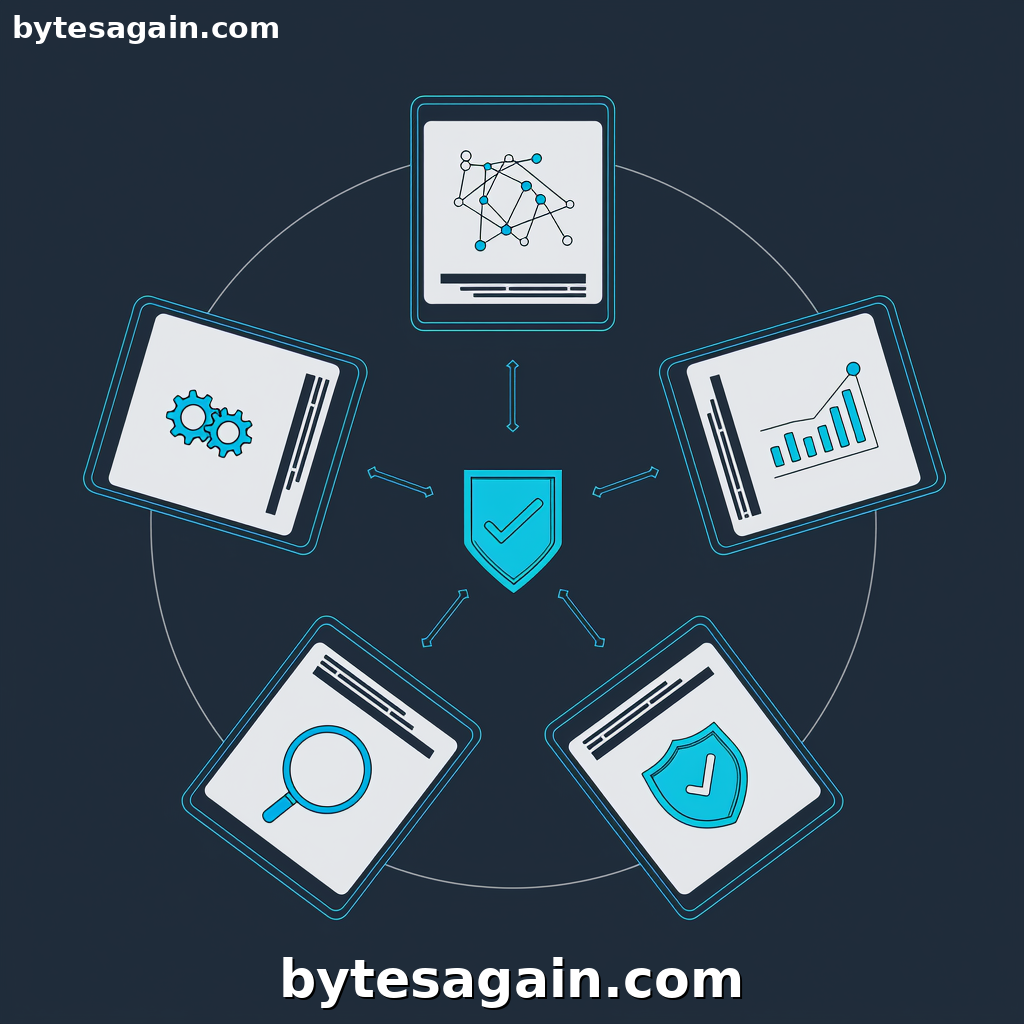
Fraud costs businesses billions every year. Building an AI agent to identify and prevent fraudulent activity requires more than just a model — you need a system that can monitor transactions, adapt to new attack patterns, and coordinate multiple tools. The right skill selection determines whether your agent catches fraud in real time or misses the signal in the noise. This article compares five essential skills from the BytesAgain marketplace to help you automate fraud detection effectively.
The Five Skills in Focus
Each skill brings a distinct capability to a fraud detection agent. Understanding their strengths and limits is critical.
Agent Learner — This skill specializes in benchmarking and comparing agent prompts and evaluation results. If you are tuning your fraud detection strategy or running A/B tests on different detection prompts, Agent Learner provides the framework to measure what works. It excels when you need to compare multiple configurations side by side.
Agent Ops Framework — A comprehensive operations reference for AI agents. It covers multi-agent architectures, ReAct and chain-of-thought patterns, tool-use conventions, and prompt injection defense. For fraud detection, this skill is invaluable when designing the overall system architecture and ensuring security.
Agent Toolkit — Focused on configuring and benchmarking agent tools and integration patterns. Use it when setting up agent workflows, comparing different data sources, or evaluating which external APIs your fraud agent should call. It is the practical builder's skill.
Data Analysis — The classic data workhorse. Query databases, generate reports, automate spreadsheets, and turn raw transaction logs into actionable insights. For fraud detection, this skill powers the analytics that surface suspicious patterns.
Developer Agent — Orchestrates software development by coordinating with Cursor Agent, managing git workflows, and ensuring quality delivery. Use this when implementing your fraud detection system as code — writing the logic, deploying updates, and maintaining the codebase.
Side-by-Side Comparison
When to Use Each Skill
Agent Learner is best when you already have a fraud detection agent running but want to optimize it. You need to compare prompt variations that detect different fraud types — credit card scams, account takeovers, or synthetic identity fraud. It gives you a structured way to evaluate results.
Agent Ops Framework shines during the design phase. Before writing any code, you need to decide: single agent or multi-agent? Should the fraud detection agent use chain-of-thought reasoning to explain why it flagged a transaction? How do you defend against prompt injection if an attacker tries to manipulate the agent? This skill answers those questions.
Agent Toolkit is the go-to when integrating external tools. Your fraud agent might need to check IP geolocation databases, call a credit bureau API, or query a blacklist service. Agent Toolkit helps you configure these connections and benchmark their performance.
Data Analysis is essential for the raw analytics layer. You need to query transaction databases, generate daily fraud reports, and visualize patterns over time. This skill handles the data pipeline from query to insight.
Developer Agent is for the implementation phase. Once you have designed the architecture and chosen your tools, you need to write the code, set up CI/CD, and manage version control. Developer Agent coordinates with Cursor Agent to produce production-ready code.
Best Fit Scenarios
- For a solo builder prototyping a fraud detector: Start with Agent Toolkit to connect your data sources, then use Data Analysis to explore the data and find patterns. Add Agent Ops Framework when you need to structure the agent logic.
- For a team optimizing an existing fraud system: Agent Learner is your primary tool. Run prompt comparisons, evaluate detection rates, and iterate on false positive reduction.
- For a security-focused deployment: Agent Ops Framework is non-negotiable. The prompt injection defense and multi-agent patterns directly protect against adversarial attacks.
- For a data-heavy operation: Data Analysis handles the volume. Combine with Agent Learner to test whether your analytics are catching the right signals.
Real User Scenario: Building a Payment Fraud Agent
Imagine you are a fraud analyst at an e-commerce company. Your team wants to build an AI agent that reviews each transaction in real time and flags suspicious ones for manual review.
Phase 1: Exploration — You start with Data Analysis to query your transaction database. You find that 90% of fraudulent transactions come from new accounts making high-value purchases within the first hour of registration. You build a report that visualizes this pattern.
Phase 2: Architecture Design — You use Agent Ops Framework to design the agent. You decide on a ReAct pattern: the agent observes a transaction, reasons about risk factors, and then acts by approving, flagging, or blocking. You also implement prompt injection defenses because fraudsters might try to craft inputs that bypass detection.
Phase 3: Tool Integration — With Agent Toolkit, you connect the agent to your payment gateway API, IP geolocation service, and internal blacklist database. You benchmark each tool to ensure response times stay under 200 milliseconds.
Phase 4: Prompt Tuning — You deploy an initial version, then use Agent Learner to compare different prompt strategies. One prompt focuses on velocity checks (how fast transactions happen), another on geographic anomalies. Agent Learner shows that the combined prompt catches 40% more fraud with only a 5% increase in false positives.
Phase 5: Implementation — Finally, Developer Agent helps you write the production code, set up automated tests, and deploy through your CI/CD pipeline. The entire system goes from prototype to production in under two weeks.
Actionable advice: Start with Data Analysis to understand your fraud patterns before architecting the agent. Most teams waste time building complex agents for problems they haven't fully measured yet. Let the data guide your design, not the other way around.
Recommendations by User Type
Data Scientists and Analysts — Your strength is in the numbers. Focus on Data Analysis for pattern discovery and Agent Learner for evaluating model performance. These two skills give you the experimental framework to iterate quickly.
Engineering Teams — You need the full stack. Start with Agent Ops Framework for architecture, then Agent Toolkit for integrations, and Developer Agent for implementation. These three skills cover design through deployment.
Security Specialists — Your priority is defense. Agent Ops Framework is essential for prompt injection protection and secure agent patterns. Add Agent Learner to test how well your defenses hold up against adversarial prompts.
Product Managers — You do not need to code, but you need to understand the trade-offs. Review Agent Ops Framework to understand architectural decisions and Agent Learner to evaluate detection quality. These skills help you communicate effectively with your technical team.
Final Thoughts
Fraud detection is an arms race. Attackers evolve their methods, and your agent must adapt. The five skills covered here give you a complete toolkit: Agent Learner for optimization, Agent Ops Framework for architecture, Agent Toolkit for integration, Data Analysis for insight, and Developer Agent for implementation. No single skill covers everything. The best fraud detection agents combine multiple skills in a thoughtful workflow.
Explore the AI Agent for Fraud Detection use case to see how these skills work together in practice.
Find more AI agent skills at BytesAgain.