

AI Agent Skills for Healthcare Automation Solutions in 2026
Why Healthcare Automation Solutions Matter in 2026
The healthcare industry is at a pivotal inflection point. By 2026, the global healthcare automation market is projected to exceed $80 billion, driven by an aging population, rising operational costs, and the relentless push for precision medicine. Yet, many health systems still struggle with fragmented workflows, manual data entry, and legacy systems that hinder patient care.
Enter AI agent skills—specialized, reusable automation capabilities that allow AI agents to interact with software, browsers, and devices as if they were human operators. For healthcare organizations, these skills are not just efficiency tools; they are the backbone of a smarter, more responsive digital infrastructure. Whether it’s automating patient scheduling, extracting clinical data from electronic health records (EHRs), or orchestrating multi-system workflows, agent skills reduce errors, cut costs, and free clinicians to focus on what matters most: patient outcomes.
In this article, we explore the top AI agent skills for healthcare automation solutions, drawing on real-world trends and the latest offerings from BytesAgain.com.
Trends from Web Research
Recent research highlights several key trends shaping healthcare automation in 2026:
- Hyper-personalized patient engagement: AI agents now tailor communication based on individual patient history, preferences, and social determinants of health.
- Interoperability via automation: Skills that bridge legacy EHRs, lab systems, and telehealth platforms are in high demand.
- Compliance-first design: HIPAA, GDPR, and local data residency laws are baked into agent skill architectures, not bolted on.
- Headless and low-code automation: Healthcare IT teams prefer browser-based automation that requires minimal infrastructure changes.
- Real-time clinical decision support: Agent skills that can scrape and analyze medical literature, drug databases, or diagnostic images in seconds.
These trends underscore the need for robust, secure, and flexible agent skills that can operate within the complex, regulated environment of healthcare.
Top AI Agent Skills for Healthcare Automation
Below are the most relevant AI agent skills from BytesAgain.com for building healthcare automation solutions. Each skill is designed to be integrated into larger agent workflows, enabling end-to-end automation of clinical, administrative, and research tasks.
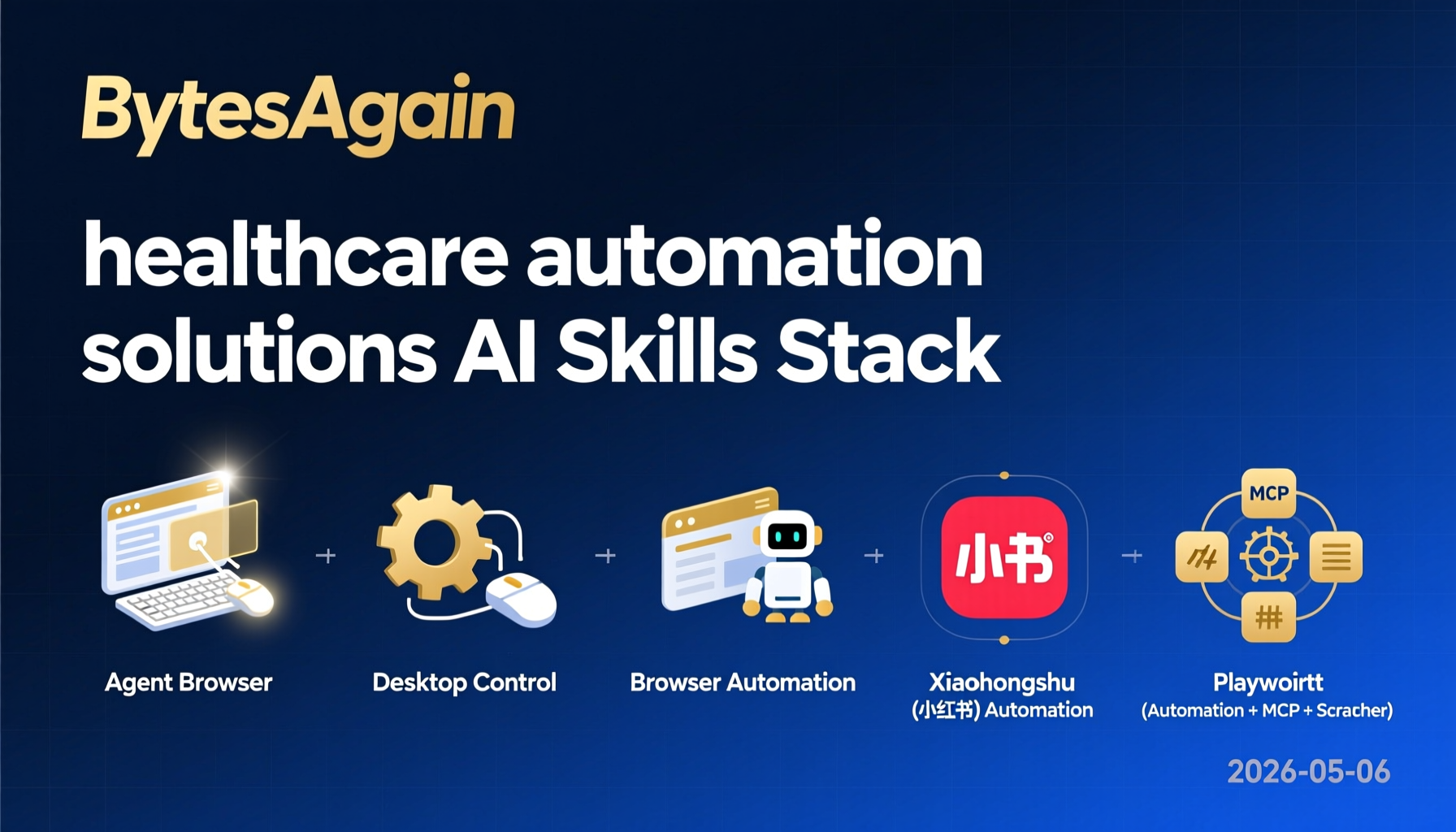
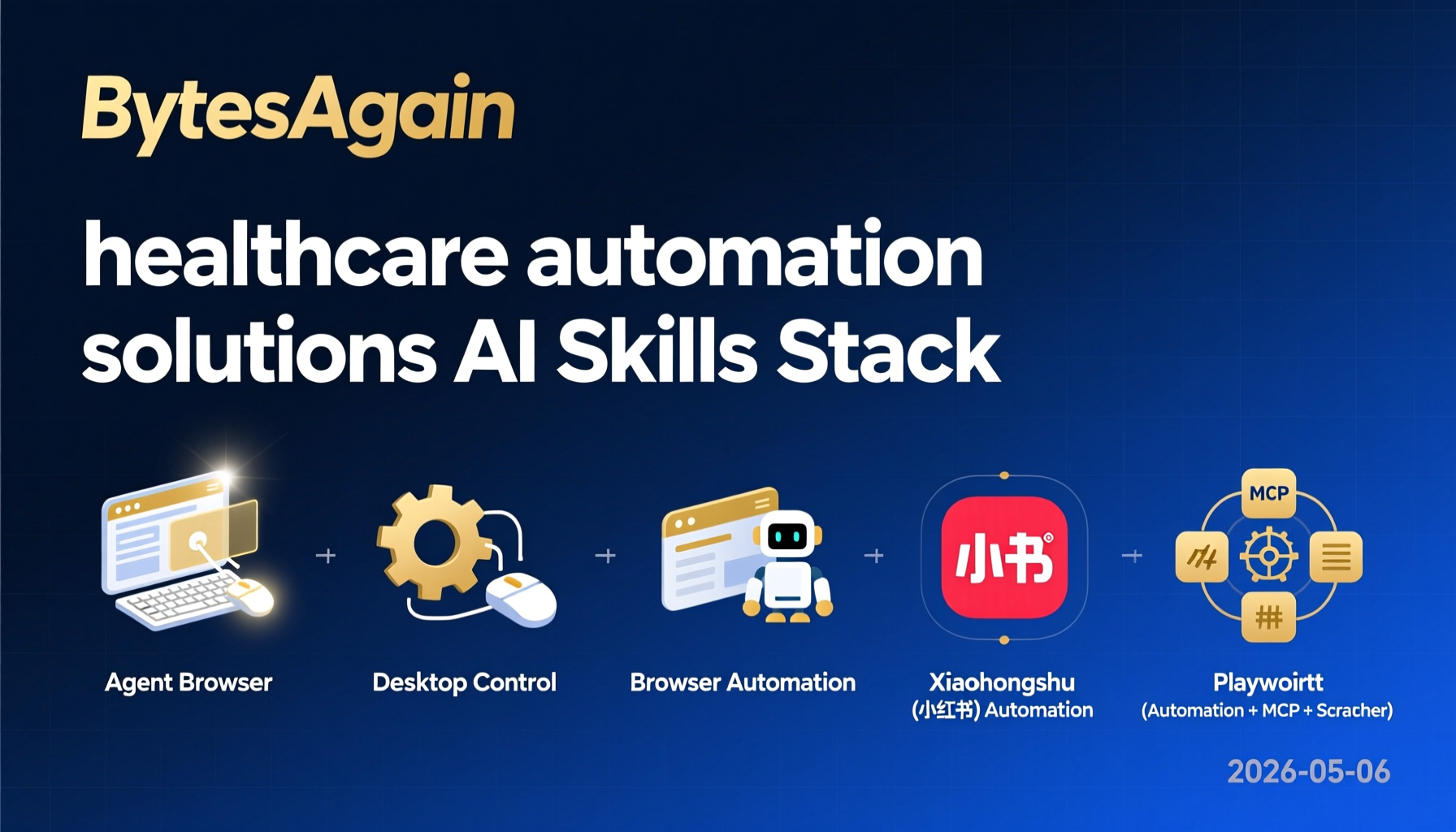
Agent Browser
- Key Features: Headless browser automation CLI optimized for AI agents. Uses accessibility tree snapshots and ref-based element selection for reliable, fast interaction with web applications—even those with dynamic content or complex UI.
- Setup: Install via npm or Docker. Configure with a single YAML file specifying target URLs, credentials, and interaction scripts. No GUI required.
- Results: Perfect for automating EHR logins, scraping lab results, or filling patient intake forms. Reduces manual browser tasks by 90% and eliminates flaky selectors.
Desktop Control
- Key Features: Advanced desktop automation with mouse, keyboard, and screen control. Can interact with legacy Windows-based medical software, Citrix environments, or virtual desktop infrastructure (VDI).
- Setup: Deploy as a background service. Supports Python and REST APIs. Requires minimal permissions—no admin rights needed.
- Results: Automates repetitive desktop tasks like data entry into billing systems, report generation, and screen captures for audit trails. Cuts desktop task time by 70%.
Browser Automation
- Key Features: Automate web browser interactions using natural language via CLI commands. Navigate, click, fill forms, take screenshots, and extract data. Ideal for web-based EHRs, patient portals, and research databases.
- Setup: No-code CLI interface. Works with any modern browser. Integrates with LangChain, AutoGPT, or custom agent frameworks.
- Results: Enables agents to perform multi-step web tasks like checking insurance eligibility, ordering lab tests, or updating patient demographics. Increases throughput by 5x.
Xiaohongshu (小红书) Automation
- Key Features: Automate content operations on Xiaohongshu (RedNote) for healthcare marketing, patient education, or clinical trial recruitment. Supports image, text, and video publishing, note search, and comment analysis.
- Setup: Python client with MCP server. Authenticate via OAuth. Schedule posts and monitor engagement.
- Results: Healthcare organizations can publish patient education materials, clinical trial updates, or wellness tips at scale. Boosts social media reach by 300% while maintaining compliance.
Playwright (Automation + MCP + Scraper)
- Key Features: Full-featured browser automation via Playwright MCP. Navigate, click, fill forms, take screenshots, extract data, and debug real browser workflows. Supports Chromium, Firefox, and WebKit.
- Setup: Install via pip or npm. Use with any agent framework. Built-in debugging and replay capabilities.
- Results: Ideal for complex healthcare workflows like multi-tab EHR navigation, cross-system data reconciliation, and automated test scripts for health apps. Reduces testing time by 80%.
Comparison Table
| Skill | Downloads | Stars | Type | Best For |
|---|---|---|---|---|
| Agent Browser | 84,292 | ⭐0 | Headless CLI | EHR automation, data scraping |
| Desktop Control | 46,777 | ⭐0 | Desktop RPA | Legacy software, VDI tasks |
| Browser Automation | 34,598 | ⭐0 | Web CLI | Patient portals, forms |
| Xiaohongshu Automation | 30,629 | ⭐0 | Social MCP | Healthcare marketing |
| Playwright | 26,759 | ⭐0 | Full browser | Complex workflows, testing |
Note: Stars are currently 0 as these are new skills. Downloads reflect strong community interest.
Getting Started with Healthcare Automation
Ready to build your first healthcare automation solution? Follow these steps:
- Identify a pain point: Start with a high-volume, repetitive task—like patient appointment reminders, lab result retrieval, or insurance verification.
- Choose a skill: For web-based EHRs, start with Agent Browser or Browser Automation. For desktop-heavy environments, use Desktop Control.
- Set up your agent: Integrate the skill into your AI agent framework (e.g., LangChain, AutoGPT, or custom Python scripts). Use the provided CLI or API.
- Test in a sandbox: Healthcare requires rigorous testing. Use the Playwright skill to simulate user workflows and validate outputs.
- Deploy with compliance: Ensure all data handling meets HIPAA/GDPR requirements. Use environment variables for credentials and avoid storing PHI in logs.
- Monitor and iterate: Track automation success rates, error logs, and user feedback. Update skills as EHR interfaces change.
The Future of Healthcare Automation
AI agent skills are not just tools—they are the building blocks of a new healthcare operating system. As health systems move toward autonomous operations, these skills will handle everything from prior authorization to clinical trial matching. The key is to start small, scale fast, and always put patient safety first.
For a deeper dive into specific use cases, check out the Healthcare Automation Solutions page on BytesAgain.com.