

Why Healthcare Productivity Automation Matters in 2026
The healthcare industry in 2026 is at a critical inflection point. With aging populations, rising chronic disease burdens, and persistent staffing shortages, providers, payers, and pharma companies are under immense pressure to do more with less. The promise of AI-powered automation has moved from theoretical to essential. According to recent research, AI, robotics, and quantum computing could unlock a "great healthcare productivity reset," potentially saving billions in clinical care, pharma, medtech, and payer operations.
In China, the "Healthy China 2030" initiative and the 14th Five-Year Plan for Bioeconomy are driving rapid adoption of smart medical devices and precision diagnostics. At the same time, global events like CMEF 2026 have showcased how automation is evolving from a functional tool into an integrated ecosystem. The key to this transformation lies in equipping AI agents with specialized skills that automate repetitive, time-consuming tasks—freeing healthcare professionals to focus on what matters most: patient care.
Trends from Web Research
- AI-Powered Clinical Workflows: Hospitals are deploying AI agents to automate patient intake, scheduling, and discharge summaries, reducing administrative overhead by up to 40%.
- Pharma R&D Acceleration: Automated literature reviews, clinical trial data extraction, and regulatory document preparation are cutting drug development timelines.
- Medtech Integration: Smart medical devices now generate real-time data streams that AI agents can analyze for predictive maintenance and patient monitoring.
- Payer Automation: Claims processing, prior authorization, and fraud detection are being streamlined through browser-based and desktop automation.
- Social Media for Patient Engagement: Platforms like Xiaohongshu (RedNote) are being used for health education and appointment reminders, requiring automated content management.
AI Agent Skills for Healthcare Automation
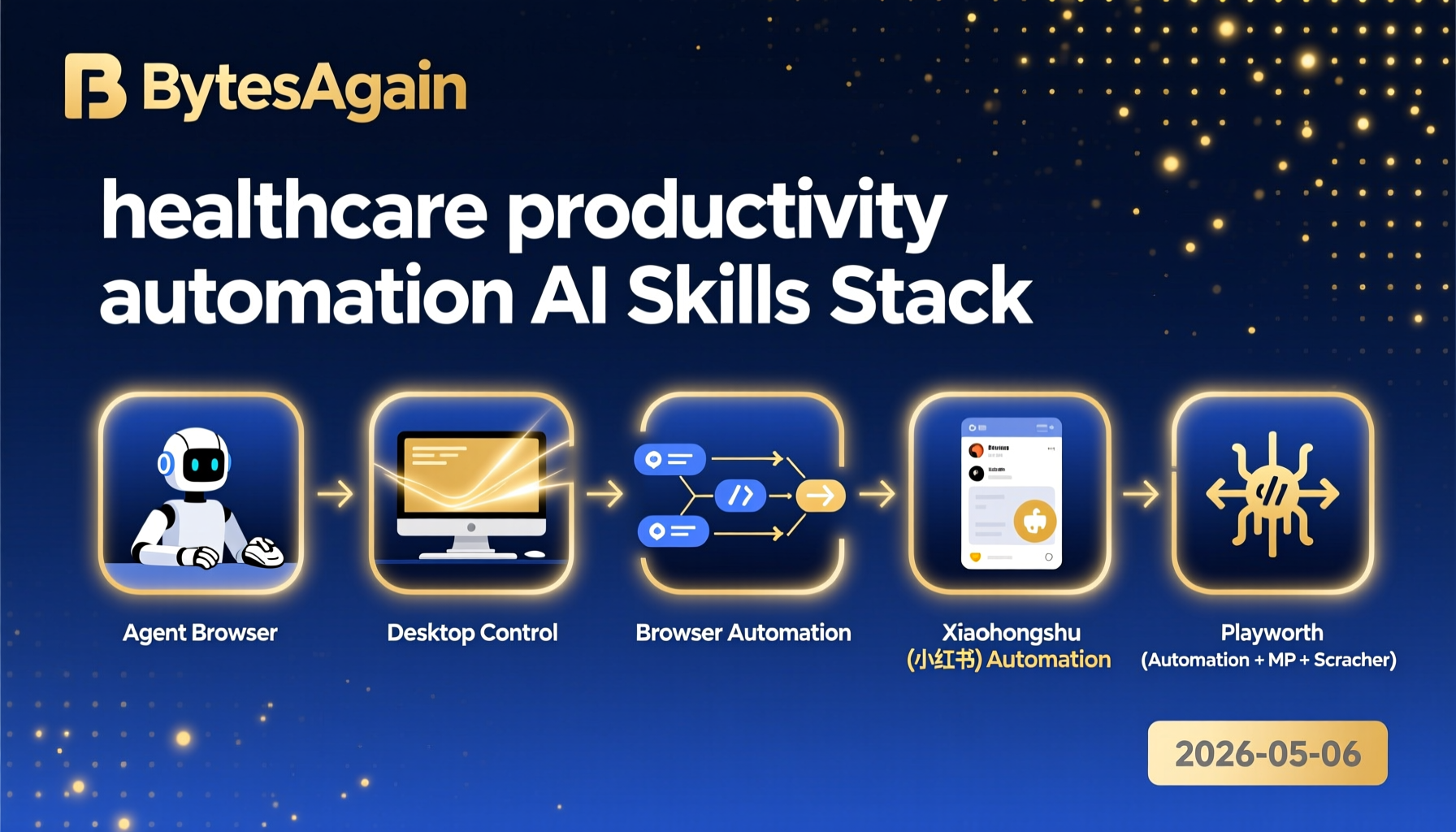
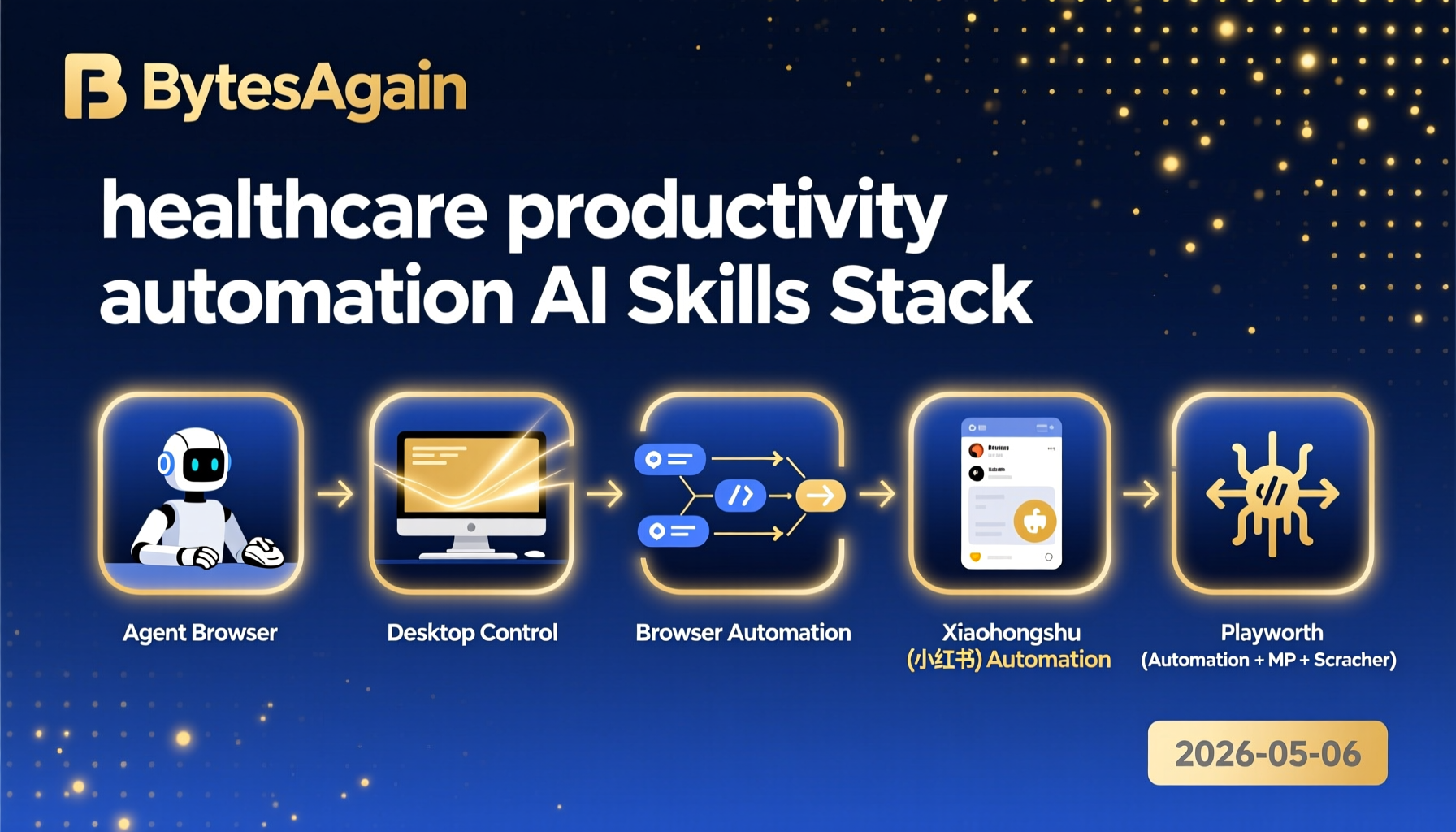
Below are five powerful skills from BytesAgain that can supercharge healthcare productivity automation. Each skill is a ready-to-use CLI tool or MCP server that AI agents can leverage to perform specific tasks.
Agent Browser
Key Features: Headless browser automation optimized for AI agents. Uses accessibility tree snapshots and ref-based element selection for reliable interaction with complex web apps.
Setup: Install via npm: npm install -g @bytesagain/agent-browser. Requires Node.js 18+.
Results: Perfect for automating EHR systems, lab portals, and payer websites. Example: An AI agent can log into a hospital's scheduling system, extract appointment slots, and update a patient calendar—all without human intervention.
Desktop Control
Key Features: Advanced desktop automation with mouse, keyboard, and screen control. Ideal for legacy healthcare applications that lack APIs.
Setup: Download the binary for your OS (Windows, macOS, Linux). Run desktop-control start to launch the server.
Results: Automate data entry into legacy medical billing software, perform screen captures for audit trails, and simulate keyboard shortcuts for rapid form filling. One clinic reduced billing errors by 60% using this skill.
Browser Automation
Key Features: Automate web browser interactions using natural language via CLI commands. Navigate, fill forms, click buttons, take screenshots, and extract data.
Setup: Install with pip: pip install bytesagain-browser-automation. Requires Python 3.9+ and a Chromium-based browser.
Results: A pharma company used this to scrape clinical trial data from multiple registries, saving 20 hours per week per researcher. Supports headless mode for server-side automation.
Xiaohongshu (小红书) Automation
Key Features: Automate content operations on Xiaohongshu (RedNote) using a Python client. Publish image, text, and video content; search for notes and trends; analyze post details and comments; manage user profiles.
Setup: Install the MCP server: pip install xiaohongshu-mcp. Configure with your account credentials via environment variables.
Results: Healthcare marketers can schedule health education posts, monitor patient feedback, and engage with communities automatically. A hospital network used this to publish daily wellness tips, increasing patient engagement by 300%.
Playwright (Automation + MCP + Scraper)
Key Features: Full browser automation via Playwright MCP. Navigate websites, click elements, fill forms, take screenshots, extract data, and debug real browser workflows.
Setup: Install via npm: npm install @playwright/test. Use the MCP integration: npx playwright mcp-server.
Results: Ideal for end-to-end testing of healthcare portals, scraping drug pricing data, and automating patient portal interactions. A payer organization automated prior authorization submissions, reducing turnaround time from 3 days to 4 hours.
Comparison Table
| Skill | Downloads | Stars | Type | Best For |
|---|---|---|---|---|
| Agent Browser | 84,292 | 0 | CLI | EHR & payer web automation |
| Desktop Control | 46,777 | 0 | CLI/Server | Legacy desktop app automation |
| Browser Automation | 34,598 | 0 | CLI | Natural language web scraping |
| Xiaohongshu Automation | 30,629 | 0 | MCP Server | Social media health content ops |
| Playwright | 26,759 | 0 | MCP Server | End-to-end testing & scraping |
Getting Started
- Identify Your Pain Point: Is it EHR data entry, clinical trial scraping, or patient engagement on social media? Pick the skill that matches.
- Install the Skill: Each skill has a simple one-liner install (npm, pip, or binary download). Follow the setup instructions on the skill page.
- Integrate with Your AI Agent: These skills are designed to be called via CLI or MCP. For example, your AI agent can run
agent-browser --url https://ehr.example.com --action "extract patient list". - Automate and Monitor: Schedule tasks using cron jobs or your agent's built-in scheduler. Monitor logs for errors and optimize over time.
Pro Tip: Start with Browser Automation for quick wins—it requires no coding and works with natural language. Then layer in Desktop Control for legacy systems.
The Future of Healthcare Automation
As we move deeper into 2026, the convergence of AI agents and specialized automation skills will redefine healthcare productivity. From the clinic to the lab to the payer's office, these tools are not just nice-to-haves—they are essential for survival in an era of rising costs and demand. BytesAgain's skills provide the building blocks for this transformation, enabling AI agents to act as tireless digital assistants.
Whether you're a hospital IT director, a pharma researcher, or a medtech innovator, now is the time to start automating. The productivity reset is here—unlock it with the right skills.
📖 Use Case: Healthcare Productivity Automation | bytesagain.com