

Published by BytesAgain · May 2026
HR Automation Showdown: Which AI Agent Skill Automates Hiring, Screening, and Onboarding Best?
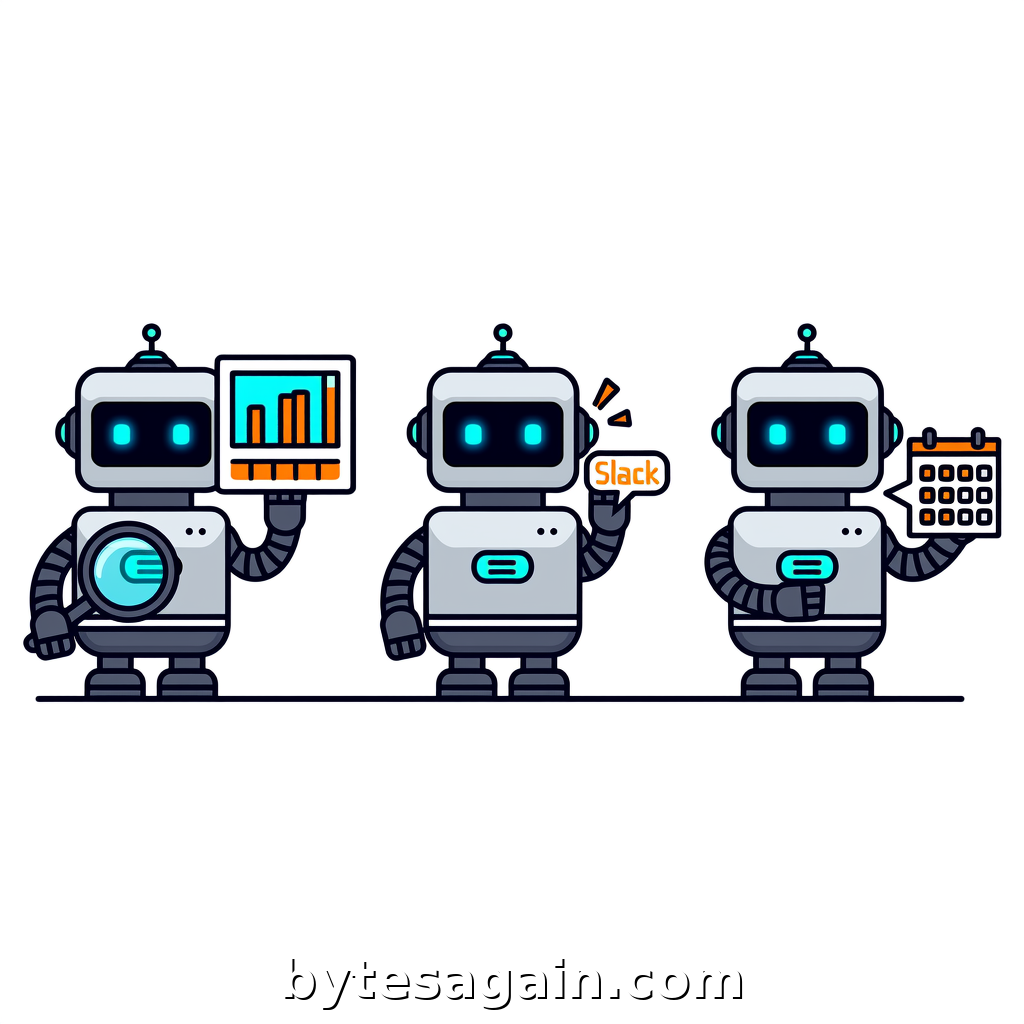
When you're drowning in resumes, juggling job postings across multiple boards, and onboarding new hires manually, the promise of an AI agent that can automate the grunt work sounds like a lifeline. The Explore the HR Automation use case brings together three distinct skills designed to tackle different parts of the hiring pipeline. But not every skill fits every HR problem. Some are built for communication, others for data crunching, and one acts as a reference backbone.
This article breaks down the Data Analysis Workflow, Slack Automator, and Social Automator skills. We'll compare their capabilities, show you when to deploy each, and help you build the right agent configuration for your specific HR automation needs.
The Three Skills at a Glance
Data Analysis Workflow
This skill delivers a standardized data analysis pipeline that integrates data-analysis, statistical-analysis, and scientific-visualization tools. For HR, that means processing applicant tracking system exports, calculating time-to-hire metrics, visualizing diversity data, and generating onboarding compliance reports. Its strength lies in turning raw HR data into actionable insights without manual spreadsheet work.
Slack Automator
Built for teams that live in Slack, this skill handles messaging automation, channel management, and search operations using Block Kit. In an HR context, it can send scheduled reminders to hiring managers, sync interview feedback channels, notify teams about new offers, and monitor chat for urgent onboarding questions. Its core value is reducing Slack noise while keeping everyone informed.
Social Automator
This skill serves as a reference tool for developer tools and implementation patterns. For HR, it helps automate the posting and scheduling of job openings across social platforms, manage employer branding content, and track engagement on career pages. It's less about internal communication and more about external candidate outreach.
Side-by-Side Comparison
Primary Function
- Data Analysis Workflow: Processes and visualizes HR datasets
- Slack Automator: Manages internal team communications and notifications
- Social Automator: Handles external job posting and social media scheduling
Best Use Case in HR
- Data Analysis Workflow: Resume screening analytics, onboarding checklist completion rates, recruitment funnel analysis
- Slack Automator: Automated interview scheduling reminders, new hire channel creation, real-time status updates to hiring teams
- Social Automator: Posting job openings to LinkedIn, Twitter, and Facebook; scheduling employer branding content; monitoring engagement
Output Type
- Data Analysis Workflow: Charts, reports, statistical summaries, visual dashboards
- Slack Automator: Messages, channel updates, search results, interactive Block Kit modals
- Social Automator: Published posts, scheduled content, engagement analytics
Integration Style
- Data Analysis Workflow: Works with CSV uploads, API data pulls, database connections
- Slack Automator: Directly interacts with Slack API and workspace channels
- Social Automator: Connects to social media platform APIs
User Skill Level
- Data Analysis Workflow: Intermediate — requires understanding of data structures and metrics
- Slack Automator: Beginner-friendly — most HR teams already use Slack daily
- Social Automator: Beginner to intermediate — basic social media management knowledge needed
Real-World Scenario: Scaling a Growing Company
The Situation: A mid-sized tech company is hiring 15 new engineers this quarter. The HR team of three is overwhelmed.
The Problem: Job postings are scattered across LinkedIn, Indeed, and Twitter. The hiring manager keeps missing interview feedback deadlines. And the onboarding checklist for new hires is tracked in a shared spreadsheet that nobody updates on time.
Skill Recommendations:
For the job posting bottleneck, the Social Automator skill can schedule and publish openings across multiple platforms from a single prompt. It ensures consistent branding and tracks which channels generate the most applications.
For the internal communication chaos, the Slack Automator skill can automatically create a private channel for each new role, send daily reminders to hiring managers with pending feedback, and notify the team when an offer letter is sent.
For the onboarding and metrics tracking, the Data Analysis Workflow skill can ingest the ATS export, calculate average time-to-hire per role, visualize which sourcing channels perform best, and generate a weekly onboarding progress report.
The Result: The HR team reduces manual posting time by 60%, cuts hiring manager response lag by 40%, and gets real-time visibility into their pipeline without touching a spreadsheet.
Which Skill Is Right for Your HR Team?
Choose Data Analysis Workflow if: You need to make sense of recruitment data. This skill shines when you're analyzing applicant flow, calculating cost-per-hire, or generating compliance reports. It's the right pick for HR analysts and operations specialists who need to present data-backed recommendations to leadership.
Choose Slack Automator if: Your team relies heavily on Slack for coordination. This skill is ideal for reducing notification fatigue, automating routine updates, and keeping hiring processes moving. It's perfect for HR generalists and recruiting coordinators who spend their day in Slack channels.
Choose Social Automator if: Employer branding and external candidate sourcing are your priorities. This skill works best for recruitment marketing teams and HR managers who want to maintain a consistent presence across job boards and social platforms without manual posting.
Actionable advice: Start with the Slack Automator skill if your team's biggest bottleneck is internal communication. It delivers the fastest visible improvement — within one week, you'll reduce missed deadlines and channel clutter. Add Data Analysis Workflow later to measure the impact of those changes.
Building Your HR Automation Stack
No single skill covers the entire hiring lifecycle. The smartest approach is to combine them based on your team's specific pain points.
For a small startup with one HR person: Start with Slack Automator for internal coordination, then add Social Automator when you need to scale job postings.
For a growing company with a dedicated recruiter: Combine Social Automator for external posting with Data Analysis Workflow for tracking sourcing effectiveness.
For an enterprise HR team with analysts: Lead with Data Analysis Workflow for strategic reporting, then integrate Slack Automator to distribute those insights to stakeholders automatically.
The Explore the HR Automation use case page provides more details on how these skills work together in pre-built agent configurations.
Final Verdict
If you can only pick one skill for HR automation right now, choose Slack Automator. It addresses the most common HR bottleneck — communication breakdowns — and requires no technical expertise. But for a complete automation strategy, combine all three skills to cover job posting, internal coordination, and data-driven decision making.
Find more AI agent skills at BytesAgain.