

Published by BytesAgain · May 2026
Lead Nurture Automation: Which AI Agent Skill Actually Moves Deals Forward?
Every sales team knows the problem: leads go cold, follow-ups get missed, and personalization at scale feels impossible. The Lead Nurture use case solves this by automating behavior-triggered sequences across email, chat, and CRM—without requiring a developer to hard-code every decision tree. But to build this kind of intelligent nurture system, you need the right AI agent skill. The question is: which one?
Three skills from the BytesAgain marketplace claim to handle multi-agent automation. Each approaches the problem differently. This article breaks down Agent Orchestration, Agentic Workflow Automation, and Agent Team Workflows—comparing their strengths, weaknesses, and the specific lead nurture scenarios where each shines.
The Three Skills at a Glance
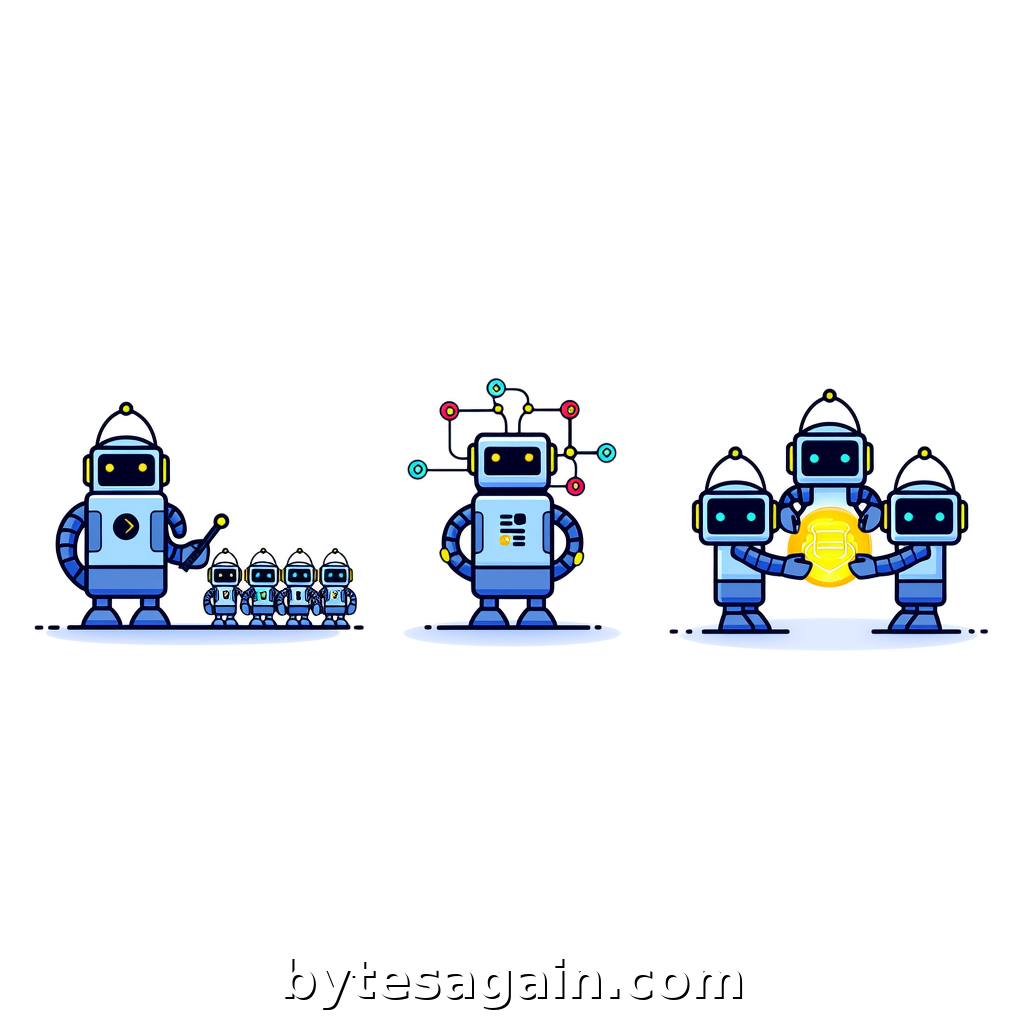
Agent Orchestration focuses on spawning and managing sub-agents. Think of it as the conductor of an orchestra: you define the overall prompt, it handles delegation, tracks running agents, and learns from outcomes. Its core strength is dynamic sub-agent management—when a lead takes an unexpected action, this skill can spin up a research agent or a copywriting agent on the fly.
Agentic Workflow Automation is about generating reusable, multi-step workflow blueprints. It excels at deterministic trigger/action chains. If you need a predictable, repeatable nurture sequence—"if lead opens email, wait 24 hours, then send follow-up"—this skill provides the blueprint structure without brittle scripting.
Agent Team Workflows uses Claude Code Agent Teams for universal multi-agent orchestration. It coordinates parallel work across multiple teammates. When you need multiple agents working simultaneously—for example, one researching a lead's company while another drafts a personalized email—this skill manages the parallel execution and result aggregation.
Side-by-Side Comparison
How They Handle Lead Scoring and Segmentation
Agent Orchestration adapts dynamically. When a lead's score crosses a threshold, the orchestrator can spawn a high-priority follow-up agent while simultaneously pausing lower-priority sequences. The learning loop means it gets better at predicting which sub-agent to deploy for which lead profile.
Agentic Workflow Automation takes a blueprint approach. You define the scoring tiers and corresponding actions in a workflow blueprint. When a lead hits a score threshold, the workflow executes the predefined branch. This is more rigid but also more predictable for compliance-heavy industries.
Agent Team Workflows assigns scoring analysis to one team member while another handles the response. The team coordinator ensures both agents finish before the next step triggers. This works well when scoring requires cross-referencing multiple data sources simultaneously.
Trigger and Action Handling
Agent Orchestration excels at event-driven triggers. A lead visiting a pricing page can trigger a sub-agent to check CRM history, another to draft a pricing email, and a third to schedule a call—all managed by the orchestrator without predefined steps.
Agentic Workflow Automation shines with deterministic triggers. "When form submitted, send confirmation, add to CRM, assign to sales rep." These blueprints are easy to audit and modify. Each step is explicit, making them suitable for teams that need strict process control.
Agent Team Workflows handles triggers that require parallel processing. When a lead downloads a whitepaper, the team can simultaneously research the lead's company, check for existing conversations, and generate a personalized follow-up—all in parallel before the sequence continues.
Adaptability and Learning
Agent Orchestration includes a feedback loop. The orchestrator tracks outcomes from each sub-agent and adjusts future delegation. Over time, it learns which copywriting style works for which segment, or which follow-up timing yields the best response rate.
Agentic Workflow Automation does not learn—it executes. The blueprints remain static unless manually updated. This is a feature, not a bug, for teams that need audit trails and regulatory compliance.
Agent Team Workflows learns through team coordination patterns. The system can optimize which agents work together and how tasks are parallelized, but the learning is about workflow efficiency rather than content optimization.
Real Example: The Mid-Funnel Lead
Consider a scenario: A lead named Sarah visited your pricing page three times, opened two emails, but hasn't booked a demo. Her lead score is 72/100. What happens next?
Using Agent Orchestration: The orchestrator recognizes Sarah's score and engagement pattern. It spawns a research sub-agent to check her company size and industry, a copywriting sub-agent to draft a case study email tailored to her segment, and a scheduling sub-agent to propose three call times. The orchestrator monitors all three, and if the copywriting agent produces a weak draft, it can spawn a second agent to revise. The orchestrator logs which approach worked for future leads like Sarah.
Using Agentic Workflow Automation: A blueprint triggers based on Sarah's score tier. Step one: send case study email. Step two: wait 48 hours. Step three: if no reply, send testimonial email. Step four: if still no reply, assign to sales rep. Each step is predefined, predictable, and easy to modify by editing the blueprint.
Using Agent Team Workflows: A team forms: agent one researches Sarah's company, agent two reviews her email engagement history, agent three drafts a personalized outreach. All three work in parallel. When all finish, the team coordinator aggregates the results into a single action plan. The sales rep receives a complete brief rather than piecemeal updates.
Which Skill for Which User Type
Choose Agent Orchestration if: You run complex nurture sequences where leads take unpredictable paths. You need dynamic sub-agent delegation without manual intervention. This is ideal for growth teams experimenting with different messaging and timing strategies.
Choose Agentic Workflow Automation if: Your nurture sequences must follow strict, auditable processes. You work in regulated industries where every step needs documentation. This is best for operations teams that value predictability over flexibility.
Choose Agent Team Workflows if: Your nurture requires heavy parallel research and multi-channel coordination. You need multiple agents working simultaneously on different aspects of the same lead. This works well for enterprise sales teams with long, complex buying cycles.
Actionable advice: Start with Agentic Workflow Automation for your core nurture sequences—it gives you reliability and auditability. Add Agent Orchestration for high-value leads that need adaptive follow-up. Reserve Agent Team Workflows for your most complex accounts where parallel research saves hours per lead.
The Final Recommendation
For most lead nurture implementations, you will need more than one skill. The Lead Nurture use case page shows how these skills combine to create a complete solution.
Start with Agentic Workflow Automation to build your foundation—the deterministic blueprints that handle 80% of your leads predictably. Layer on Agent Orchestration for the adaptive handling of high-intent leads that don't follow the standard path. Bring in Agent Team Workflows for your enterprise accounts where parallel research and multi-agent coordination make the difference between a lost deal and a closed-won.
The beauty of the BytesAgain marketplace is that these skills are not mutually exclusive. You can mix and match based on the specific needs of each segment in your pipeline. The smartest lead nurture strategies use all three, each deployed where it adds the most value.
Find more AI agent skills at BytesAgain.