

Legal AI Agent Skills: Which One Fits Your Workflow?
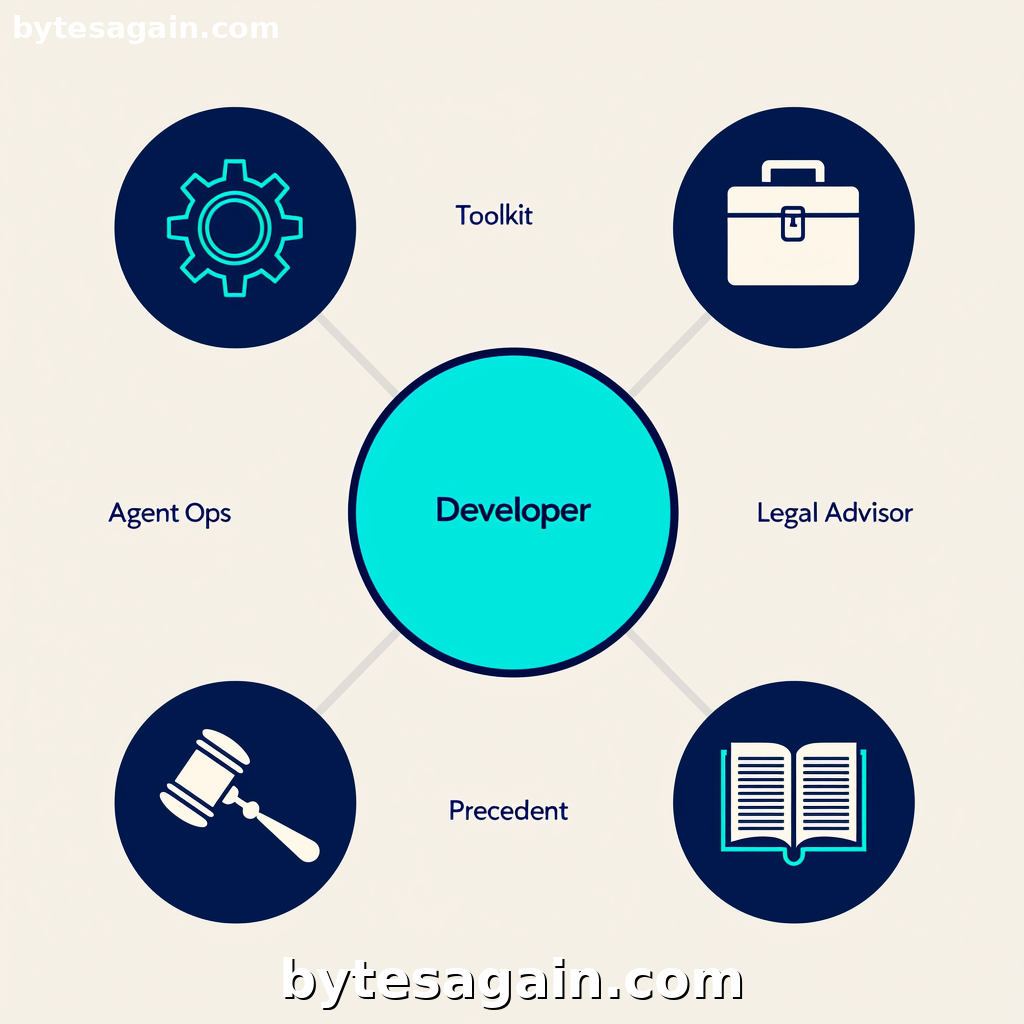
A legal professional's day is a stack of contradictions: hours of deep research interrupted by urgent document reviews, compliance checks that demand precision, and drafting work that must balance speed with accuracy. An AI agent built for this environment can automate repetitive tasks, surface relevant case law, and reduce error rates—but only if you choose the right skill set. The Legal AI Agent use case on BytesAgain provides a ready-made blueprint, but with five distinct skills available, knowing which one to use—and when—makes the difference between a helpful assistant and a liability.
This article breaks down each agent skill, compares their strengths, and gives you a practical decision framework so you can build an AI agent that actually works for legal work.
The Five Skills at a Glance
Agent Ops Framework
This skill provides a comprehensive operations reference for building and managing AI agents. It covers multi-agent architectures, reasoning patterns like ReAct and chain-of-thought, tool-use conventions, and prompt injection defense. Use it when you need to design a robust, secure agent system from the ground up.
Agent Toolkit
The Agent Toolkit focuses on configuring and benchmarking agent tools and integration patterns. It is ideal for setting up agent workflows, comparing different tools, and evaluating agent performance. If you are assembling a stack of third-party APIs or internal services, this skill helps you test and optimize.
Developer Agent
The Developer Agent orchestrates software development by coordinating with Cursor Agent, managing git workflows, and ensuring quality delivery. While not a legal skill per se, it is essential if you are building or customizing the legal AI agent itself—writing code, deploying updates, or integrating with a law firm's existing software.
Legal Advisor
The Legal Advisor generates legal templates for labor, consumer, rental, and traffic disputes. It is purpose-built for drafting dispute letters, reviewing tenant rights, and preparing claims. This is the go-to skill for practitioners who need quick, reliable document generation.
Precedent
The Precedent skill is a legal reference engine focused on stare decisis, case law hierarchy, distinguishing, overruling, and persuasive authority. Use it when researching binding case law, analyzing how a precedent applies to a new fact pattern, or preparing arguments that rely on established rulings.
Side-by-Side Comparison
Core Functionality
- Agent Ops Framework gives you the architectural blueprint—how to set up multi-agent systems, secure prompts, and design reasoning loops.
- Agent Toolkit provides the tooling layer: how to connect your agent to databases, search APIs, document stores, and evaluation benchmarks.
- Developer Agent handles the software engineering side: coding, version control, testing, and deployment.
- Legal Advisor delivers domain-specific output: templated legal documents and dispute letters.
- Precedent offers domain-specific knowledge: case law analysis and legal reasoning.
Best Use Cases
- Agent Ops Framework is best for system architects and AI engineers building a legal agent from scratch or scaling an existing one.
- Agent Toolkit fits when you need to integrate multiple data sources—for example, connecting a legal research API, a document management system, and a compliance database.
- Developer Agent is for teams that need to maintain and extend the agent's codebase, especially when customizing templates or adding new features.
- Legal Advisor works for solo practitioners and small firms that need fast, accurate document generation without building a whole system.
- Precedent is essential for litigators, paralegals, and legal researchers who spend significant time on case law analysis.
When to Use Each
- Use Agent Ops Framework when you are designing the agent's reasoning and security. If you are worried about prompt injection or need a multi-agent workflow, start here.
- Use Agent Toolkit after you have a design—when you need to pick the right tools and test their performance.
- Use Developer Agent during the build phase, especially if you are iterating on the agent's code or integrating with a law firm's custom software.
- Use Legal Advisor when you need to produce a tenant rights letter, a consumer dispute, or a traffic claim template immediately.
- Use Precedent when you need to argue a motion based on binding authority or distinguish a case from an unfavorable precedent.
Real Example: A Personal Injury Case
Consider a paralegal preparing for a settlement conference. The case involves a slip-and-fall in a retail store. The paralegal needs to:
- Research whether the store had a duty of care under state law.
- Draft a demand letter to the store's insurance company.
- Verify that the settlement amount is within typical ranges for similar cases.
- Ensure the final document complies with local court formatting rules.
Skill recommendations:
- Start with Precedent to research the duty of care standard. The skill's stare decisis reference helps identify binding case law in the jurisdiction.
- Use Legal Advisor to generate the demand letter template. The skill provides labor and consumer dispute templates that can be adapted for premises liability.
- If the paralegal's firm uses a custom case management system, the Agent Toolkit can help integrate the agent with that system, pulling client data and prior settlement amounts.
- For the final formatting check, the Developer Agent can be used to write a script that validates the document against court rules.
Actionable advice: For most legal professionals, the combination of Legal Advisor and Precedent covers 80% of daily tasks. Add Agent Toolkit only when you need to connect the agent to external systems. Save Agent Ops Framework and Developer Agent for the engineers building the platform.
Recommendation: Which Skill for Which User Type
Solo Practitioner or Small Firm Lawyer Start with Legal Advisor for document generation and Precedent for research. These two skills alone can automate the most time-consuming parts of a caseload. No engineering background required.
Paralegal or Legal Researcher Focus on Precedent. The ability to quickly distinguish cases and understand persuasive authority is the core of legal research. Supplement with Legal Advisor for drafting.
Legal Tech Engineer or Product Manager Begin with Agent Ops Framework to design a secure, scalable agent architecture. Then use Agent Toolkit to integrate with legal databases and document management systems. The Developer Agent will be your daily driver for coding and deployment.
Compliance Officer or Corporate Legal Team Use Precedent to track regulatory changes and case law that affects compliance. Pair it with Legal Advisor for generating standard compliance letters and audit documentation.
Full-Service Law Firm (5+ attorneys) Invest in all five skills. Assign the Agent Ops Framework and Developer Agent to your IT team. Let attorneys and paralegals use Legal Advisor and Precedent. Use Agent Toolkit to create a unified workflow between your practice management software and the AI agent.
Final Thoughts
Building a legal AI agent is not about finding one magic skill. It is about matching the right skill to the right task. The Legal AI Agent use case on BytesAgain gives you a structured starting point, but the real power comes from combining skills that complement each other. For most legal professionals, the Legal Advisor and Precedent pair is the fastest path to productivity. For teams building custom solutions, the Agent Ops Framework and Agent Toolkit provide the foundation.
Evaluate your workflow, identify the bottleneck, and pick the skill that removes it. Then iterate.
Find more AI agent skills at BytesAgain.
Published by BytesAgain · May 2026