

Published by BytesAgain · May 2026
Which AI Agent Skill Powers Your Risk Assessment Workflow? A Practical Comparison
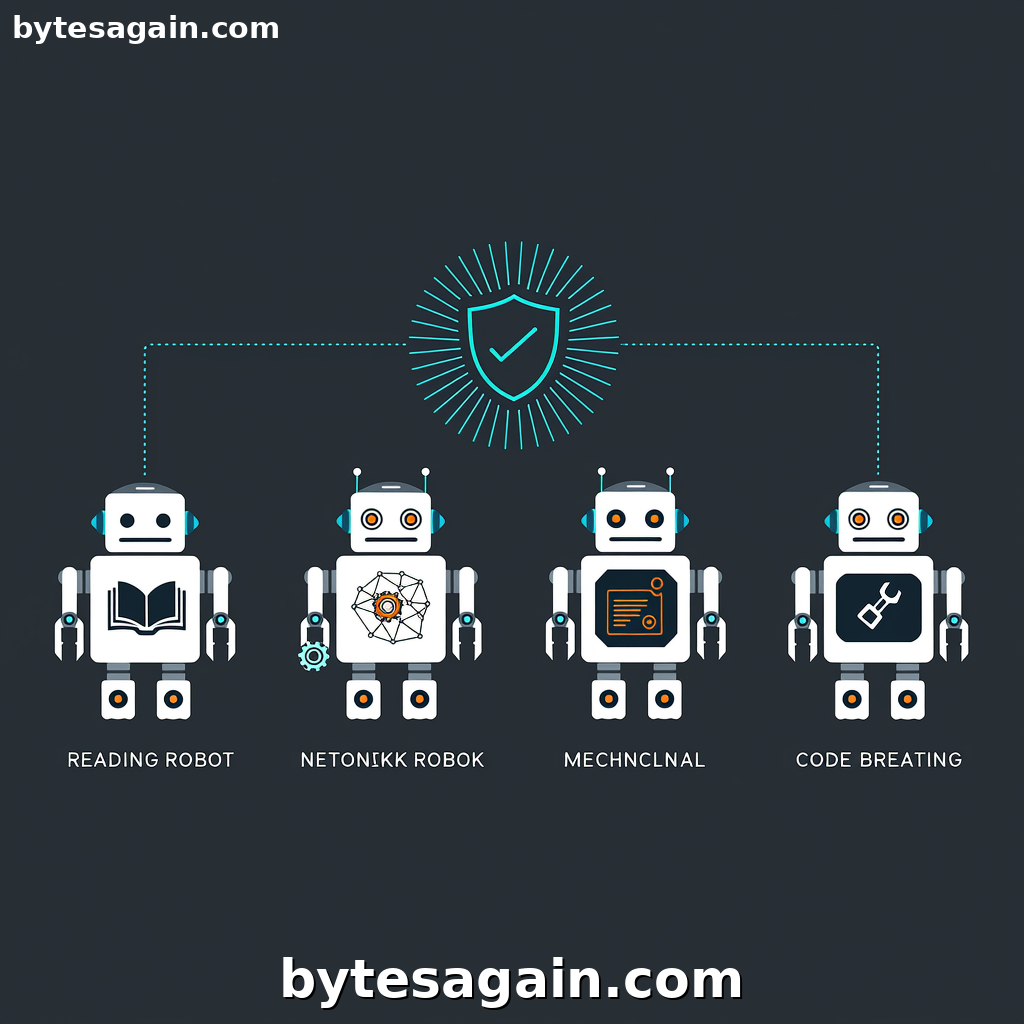
Risk evaluation is a core function in compliance, finance, cybersecurity, and operations. The challenge is scale: manual reviews are slow, inconsistent, and expensive. An AI agent can automate data collection, flag anomalies, and generate reports in minutes. But building that agent requires the right skill set. On the BytesAgain marketplace, four skills stand out for this use case. Each takes a different approach to automating risk assessment. This article compares them to help you choose the right tool for your project.
The Four Skills at a Glance
Agent Learner focuses on benchmarking and evaluating agent performance. If you need to compare prompt strategies or assess output quality across different configurations, this skill provides a structured framework for measurement.
Agent Ops Framework is a reference guide for production agent architectures. It covers multi-agent coordination, reasoning patterns like ReAct and chain-of-thought, tool-use conventions, and security measures such as prompt injection defense.
Agent Toolkit helps you configure and benchmark the tools your agent uses. From API integrations to custom functions, this skill is about setting up workflows, comparing tool effectiveness, and evaluating agent performance in real tasks.
Developer Agent is built for software delivery. It coordinates with Cursor Agent, manages git workflows, runs tests, and ensures code quality. Its strength is automating the development cycle itself.
Side-by-Side Comparison
Core purpose
Agent Learner is your measurement lab. It helps you run experiments on prompts and evaluation criteria. Use it when you need to know which prompt gets the best risk classification accuracy.
Agent Ops Framework is your architecture blueprint. It provides patterns for building agents that can reason through complex risk scenarios, coordinate multiple data sources, and operate securely in production.
Agent Toolkit is your integration hub. It focuses on the practical connections your agent needs: database lookups, API calls to risk databases, document parsers, and output formatters.
Developer Agent is your build pipeline. It automates the coding, testing, and deployment of the agent itself.
Best use case in risk assessment
Agent Learner shines when you are tuning a risk scoring model. You can test different prompt formulations and compare their outputs against known benchmarks.
Agent Ops Framework is essential when your risk agent must handle multi-step reasoning. For example, assessing supply chain risk requires checking supplier data, geopolitical events, and financial indicators in sequence.
Agent Toolkit is ideal when you have existing risk data sources and need to connect them. It helps you configure tools for pulling SEC filings, credit scores, or news feeds.
Developer Agent is best when you are building the agent from scratch and need an automated development workflow.
Strengths and limitations
Agent Learner gives you data-driven confidence in your agent's performance. The trade-off is that it does not help with architecture or tool setup.
Agent Ops Framework provides battle-tested patterns for production reliability. It can be abstract if you are looking for hands-on configuration examples.
Agent Toolkit offers practical, ready-to-use integration patterns. It assumes you already have a clear picture of your workflow.
Developer Agent accelerates development speed. It is less relevant if you are using a pre-built agent or focusing on evaluation rather than coding.
Real Scenario: Building a Vendor Risk Assessment Agent
A compliance team needs an AI agent to evaluate third-party vendors. The agent must pull financial data from Bloomberg, check sanctions lists, analyze news sentiment, and generate a risk score.
Who does what?
The team lead starts with Agent Ops Framework to design the overall architecture. They decide on a multi-agent approach: one agent handles financial data, another monitors news, and a coordinator agent applies reasoning rules.
A data engineer uses Agent Toolkit to configure the specific tools. They set up Bloomberg API integration, a sanctions list parser, and a sentiment analysis endpoint. The Toolkit helps them benchmark which news API returns the most relevant results.
An AI researcher applies Agent Learner to tune the scoring prompts. They run 50 test cases comparing different prompt structures, measuring accuracy against the team's manual audit results. The Learner reveals that a chain-of-thought prompt improves risk classification by a measurable margin.
A developer uses Developer Agent to automate the build process. Each time a tool configuration or prompt is updated, the Developer Agent runs tests, commits changes, and deploys the updated agent to staging.
Each skill addresses a different bottleneck. Together, they cover the full lifecycle from design to deployment.
Actionable advice: Start with Agent Ops Framework to define your architecture. Then bring in Agent Toolkit for integrations and Agent Learner for prompt tuning. Reserve Developer Agent for teams building custom agents from scratch.
Which Skill for Which User Type
For compliance analysts and risk managers who want to evaluate agent outputs without coding: Agent Learner is your entry point. You can compare risk scores, test sensitivity to prompt changes, and build confidence in the automation.
For solution architects and technical leads designing the system: Agent Ops Framework gives you the patterns to build reliable, secure multi-agent workflows. It is the foundation for any production-grade risk agent.
For integration engineers and data specialists connecting data sources: Agent Toolkit provides the practical patterns for tool configuration and benchmarking. It reduces the time spent on trial-and-error integration.
For software developers building and maintaining the agent: Developer Agent streamlines your development pipeline. It is especially valuable when you need to iterate quickly on agent features.
For teams building a complete solution: combine Agent Ops Framework for architecture, Agent Toolkit for integrations, and Agent Learner for quality assurance. The Developer Agent can optionally accelerate the build process.
Final Recommendation
No single skill covers every aspect of AI risk assessment. The right choice depends on your current bottleneck. If you are designing the system, start with Agent Ops Framework. If you are connecting data, use Agent Toolkit. If you are improving accuracy, rely on Agent Learner. If you are building from scratch, consider Developer Agent.
For a practical starting point, explore the AI Risk Assessment Agent use case to see how these skills work together in a complete solution.
Find more AI agent skills at BytesAgain.