

Published by BytesAgain · May 2026
Which AI Skill Should a Korean Founder Install First? B2B Sales, Chief of Staff, or Zero-to-One Agent
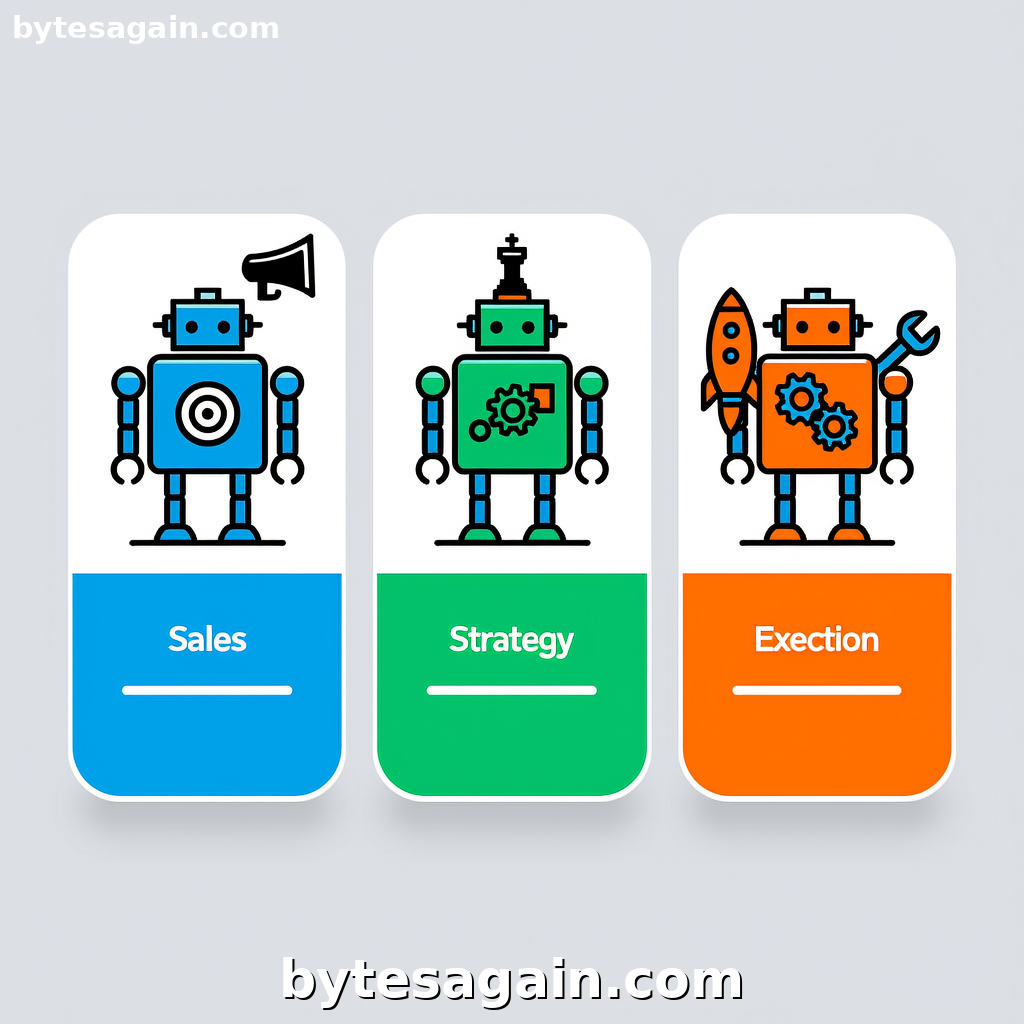
Starting a company in Korea is not the same as building one in Silicon Valley. The regulatory landscape is dense, early adopter networks cluster around Chaebol-linked ecosystems, and few localized playbooks exist for the zero-to-one phase. The Startup Founder Toolkit was designed to close that gap. It bundles three AI skills that each address a distinct layer of the founder's job: finding first customers, orchestrating decisions, and navigating initial product validation. But which skill should you install first? That depends entirely on where you are in your startup journey.
This article compares three AI agent skills from the toolkit: B2B First Ten, Chief Of Staff, and Startup Agent (→ raon-os). Each serves a different purpose. Understanding their strengths, limitations, and ideal scenarios will help you build a launch stack that actually works for Korea's unique startup environment.
The Three Skills at a Glance
B2B First Ten is a specialized sales agent built on Lenny Rachitsky's research into how successful startups acquired their first customers. It focuses exclusively on founder-led sales, warm introductions, and tactics that don't scale—precisely what you need when your product has zero market traction. This skill knows how to structure outreach sequences, identify decision-makers in Korean B2B networks, and craft messages that get replies.
Chief Of Staff acts as a decision orchestration layer for the founder. When you face a complex problem—should you pivot your pricing model? Hire a co-founder? Enter a regulated vertical?—this agent routes your question to the right advisor role, synthesizes perspectives, and can trigger multi-role board meetings. It doesn't replace domain experts; it coordinates them.
Startup Agent (→ raon-os) is the broadest of the three. It's an AI-powered startup companion specifically trained for Korean founders. It handles zero-to-one validation, market sizing, competitor analysis, and regulatory guidance. Think of it as a co-founder who never sleeps and reads Korean government documents fluently.
Side-by-Side Comparison
Core function
- B2B First Ten: Customer acquisition through founder-led sales
- Chief Of Staff: Decision orchestration and role routing
- Startup Agent (→ raon-os): Full-stack startup guidance for Korean founders
Best for which phase
- B2B First Ten: Post-validation, when you have a product and need paying users
- Chief Of Staff: Any phase, but most valuable when you have multiple advisors or co-founders
- Startup Agent (→ raon-os): Pre-product to early traction, especially regulatory-heavy industries
Strengths
- B2B First Ten: Actionable outreach templates, warm intro scripts, follow-up cadences based on proven research
- Chief Of Staff: Reduces founder cognitive load, ensures no decision gets dropped, synthesizes conflicting advice
- Startup Agent (→ raon-os): Korean-language fluency, local regulatory knowledge, market sizing for Korean verticals
Limitations
- B2B First Ten: Narrow scope—only sales. Won't help with product decisions or legal compliance
- Chief Of Staff: Requires you to have other skills or agents to route to. Less useful if you're a solo founder with no network
- Startup Agent (→ raon-os): Broad but less deep in execution. It's a guide, not a doer for specific tasks like sending cold emails
When to install first
- B2B First Ten: When you have a working prototype and need to prove revenue viability
- Chief Of Staff: When you're juggling multiple advisors and feeling decision fatigue
- Startup Agent (→ raon-os): When you're in ideation or pre-seed and need to understand the Korean market landscape
Real Scenario: A Korean Fintech Founder
Jisoo is building a B2B expense management tool for Korean SMEs. She's a solo founder with a prototype and some angel funding. She's overwhelmed by three things: understanding the financial regulatory requirements, finding her first five customers, and deciding whether to target Chaebol suppliers or independent businesses.
Here's how the three skills would help her at different stages:
Phase 1: Validation — Jisoo installs Startup Agent (→ raon-os) first. She asks it to analyze the regulatory requirements for fintech tools targeting SMEs in Korea. The agent maps out the Financial Services Commission guidelines, identifies which licenses she needs, and suggests a minimum viable product scope that avoids regulatory pitfalls. It also sizes the addressable market: how many SMEs use manual expense reporting, what competitors charge, and which verticals are underserved.
Phase 2: First customers — With a compliant MVP, Jisoo switches focus to revenue. She installs B2B First Ten and runs a warm intro campaign. The agent helps her identify decision-makers at 20 target companies, crafts personalized outreach that references their specific expense pain points, and sets up a follow-up cadence. Within three weeks, she has two pilot customers.
Phase 3: Scaling decisions — Now Jisoo has three co-founders and two advisors. She's getting conflicting advice on pricing. She installs Chief Of Staff to orchestrate the discussion. The agent routes the pricing question to her B2B sales skill for customer feedback data, to her startup agent for competitive pricing analysis, and to her advisors for strategic input. It then synthesizes the outputs and recommends a tiered pricing model with a Korean enterprise discount.
If you are a solo founder in Korea with a pre-revenue idea, install the Startup Agent first. It will save you months of regulatory research. If you have a product and need cash, install B2B First Ten immediately. The Chief of Staff is most valuable when you have a team or advisors to coordinate.
Which Skill for Which Founder
The solo pre-seed founder — Your biggest risk is building something nobody wants or that violates local regulations. Install Startup Agent (→ raon-os) as your primary skill. Use it for market research, competitor analysis, and regulatory guidance. Add B2B First Ten once you have a prototype and need to validate willingness to pay.
The post-revenue founder — You have customers but need to systematize acquisition. Install B2B First Ten to build repeatable outreach processes. Keep Startup Agent for ongoing market monitoring and competitive intelligence. The Chief of Staff becomes relevant when you hire your first employee or bring on advisors.
The team lead — You have co-founders, advisors, or investors. Your bottleneck is decision quality and speed. Install Chief Of Staff to orchestrate discussions and prevent dropped balls. Layer B2B First Ten on top for sales execution and Startup Agent for strategic research.
The regulated industry founder — Fintech, healthtech, or edtech in Korea. Install Startup Agent (→ raon-os) first. Its Korean regulatory knowledge is irreplaceable. Add B2B First Ten for customer acquisition in compliance-heavy verticals. The Chief of Staff helps when you need to coordinate with legal advisors and compliance officers.
Final Recommendation
The Startup Founder Toolkit is not a one-size-fits-all solution. It's a modular system where each skill addresses a specific bottleneck. The most effective founders install skills in order of their current constraint, not in order of popularity.
If you're at zero and need direction, start with the Startup Agent. If you have direction and need revenue, start with B2B First Ten. If you have revenue and need clarity, start with Chief of Staff.
Each skill amplifies the others. The Startup Agent tells you what to build. B2B First Ten tells you how to sell it. The Chief of Staff tells you when to make the hard calls. Together, they form a launch stack that respects the reality of building in Korea.
Find more AI agent skills at BytesAgain.