
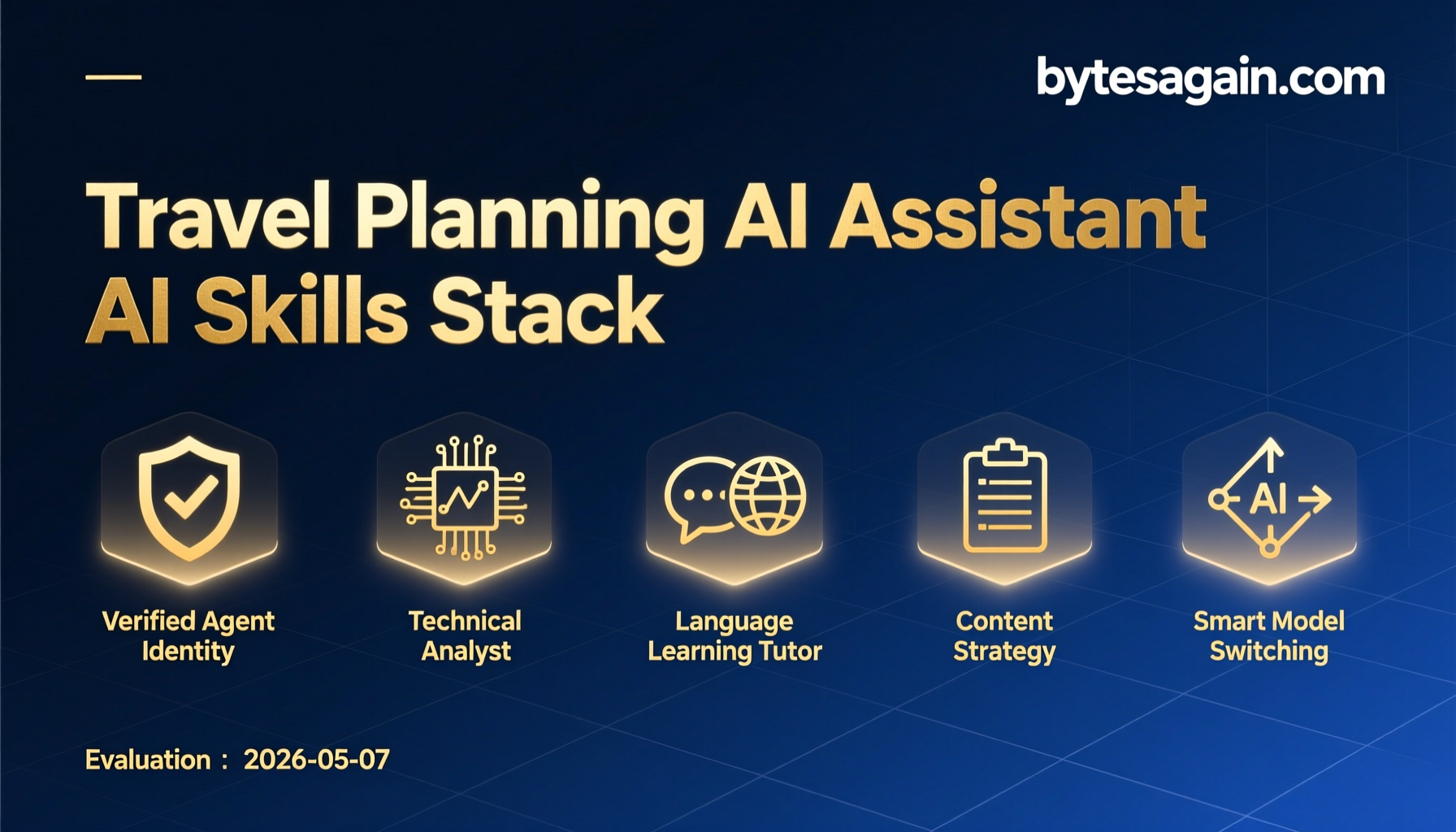
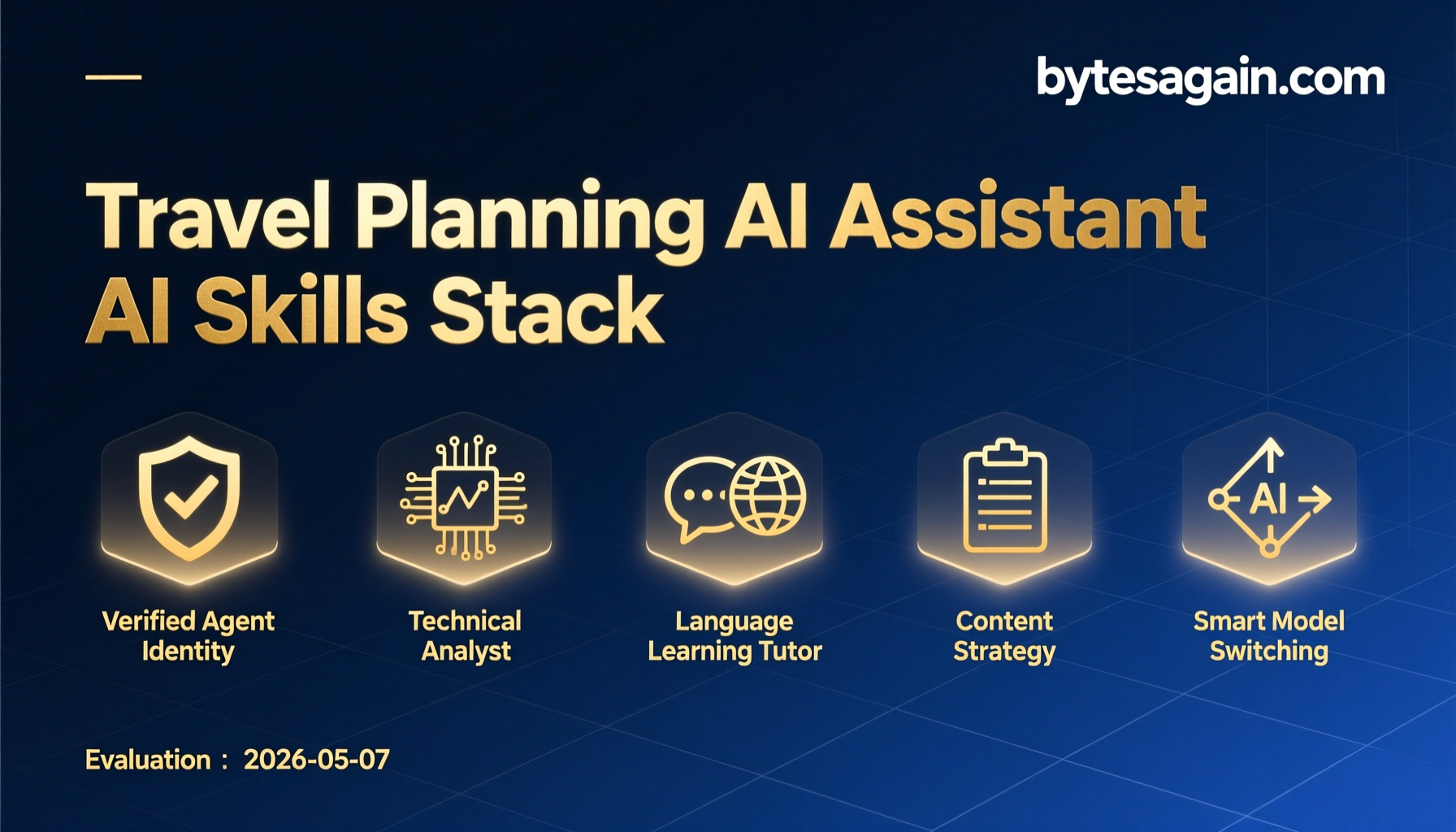

Build a Smarter Travel Planning AI Assistant: 5 Essential Skills for 2026
The travel landscape has shifted dramatically. In 2026, travelers expect more than a generic itinerary—they demand hyper-personalized, real-time, and culturally aware planning. According to recent industry reports, AI travel assistants are now handling over 40% of trip planning tasks, from visa guidance to last-minute restaurant bookings. For developers and product teams building these assistants, the challenge isn't just coding—it's equipping the AI with the right skills.
This article breaks down five essential skills from the bytesagain.com marketplace that can transform a basic travel bot into a sophisticated travel planning AI assistant. Each skill addresses a critical gap in current travel AI tools, from identity verification to language learning.
Why Travel Planning AI Assistants Matter in 2026
The 2026 "May Day" travel trends tell a compelling story. Data from major platforms shows a surge in cross-province travel, with families and solo travelers alike seeking unique experiences. AI tools are no longer optional—they're the backbone of modern travel planning.
Consider this: a traveler from Shanghai wants a 5-day trip to Chengdu with a family of three. They need a detailed itinerary that accounts for metro routes, budget constraints (300 RMB/day for food, under 400 RMB/night for accommodation), and must-visit spots like Kuanzhai Alley and the Panda Base. A basic AI might generate a list. A skilled AI assistant, however, can verify the user's identity for secure booking, analyze real-time pricing trends, and even teach basic Mandarin phrases for local interactions.
The skills below make this possible.
5 Essential Skills for Your Travel Planning AI Assistant
1. Verified Agent Identity
Key Features:
- Decentralized identity verification using Billions ERC-8004 standard
- Links AI agents to verified human identities via attestation registries
- Generates authentic, tamper-proof identity credentials
Setup:
Integrate the skill by connecting to the Billions attestation registry API. For travel assistants, this is critical when handling bookings, payments, or accessing user-sensitive data like passport details. The skill can verify that the assistant is acting on behalf of a legitimate user or travel agency.
Results:
Travelers can trust that their AI assistant is authentic. For example, when a user asks the assistant to book a hotel, the Verified Agent Identity skill ensures the request comes from a verified source, reducing fraud risk. This is especially important for cross-border travel where identity verification is mandatory.
Why it matters for travel:
In 2026, decentralized identity is becoming a standard for secure transactions. A travel assistant with this skill can authenticate users for visa applications, hotel check-ins, and rental car bookings without exposing sensitive data.
2. Technical Analyst
Key Features:
- Analyzes weekly price charts for stocks, indices, cryptocurrencies, and forex
- Identifies trends, support/resistance levels, and scenario probabilities
- Provides probability assessments for market movements
Setup:
This skill requires chart image input. For travel planning, it's repurposed to analyze price trends for flights, hotels, and package deals. The assistant can scan historical pricing data to recommend the best time to book.
Results:
Imagine a user planning a trip to Tokyo. The assistant uses the Technical Analyst skill to analyze flight price charts over the past month, identifying a support level at $800. It then advises the user to book now if prices are near that level, with a 70% probability of a price increase within the next week.
Why it matters for travel:
Dynamic pricing is a major pain point. This skill turns the assistant into a cost-optimization tool, helping travelers save money by timing their purchases based on data patterns.
3. Language Learning Tutor
Key Features:
- Conversational practice in any language
- Vocabulary drills, grammar lessons, and flashcards
- Immersive practice for real-world scenarios
Setup:
Activate the skill when the user expresses a need to learn local phrases. The assistant can switch to tutor mode, offering mini-lessons on greetings, directions, and ordering food. It uses spaced repetition for retention.
Results:
A user heading to Paris can ask the assistant to teach them basic French. Within minutes, they learn "Bonjour," "Merci," and "Où est la gare?" The assistant quizzes them with flashcards and simulates a restaurant conversation. By trip day, the user feels more confident navigating local interactions.
Why it matters for travel:
Language barriers are a top stressor for travelers. This skill transforms the assistant from a planner into a cultural bridge, enhancing the overall travel experience.
4. Content Strategy
Key Features:
- Audience research for content creation
- Content calendar building and systematization
- Channel-specific content optimization (blog, social, video)
Setup:
For travel assistants, this skill helps generate engaging travel guides, packing lists, and destination highlights. It analyzes user preferences to tailor content—for instance, a family with kids gets family-friendly activity suggestions, while a solo traveler gets off-the-beaten-path recommendations.
Results:
A user asks, "What should I do in Bangkok for 3 days?" The assistant uses Content Strategy to research the user's profile (age, interests, past trips) and generates a personalized mini-guide with top attractions, local food spots, and cultural tips. The content is formatted for easy reading on mobile.
Why it matters for travel:
Generic content fails to engage. This skill ensures every piece of advice is relevant, increasing user satisfaction and retention.
5. Smart Model Switching
Key Features:
- Auto-routes tasks to the cheapest effective Claude model (Haiku → Sonnet → Opus)
- Three-tier progression based on task complexity
- Classifies tasks before responding to optimize cost and speed
Setup:
Implement as a middleware layer. For simple queries like "What's the weather in Rome?" the assistant uses Haiku. For complex itinerary generation, it escalates to Sonnet. For multi-destination optimization with budget constraints, it uses Opus.
Results:
A user asks for a quick flight status check. The assistant responds in under 1 second using Haiku, costing $0.0001. Later, the user requests a detailed 7-day itinerary for Southeast Asia with budget tracking. The assistant escalates to Sonnet, generating a comprehensive plan in 5 seconds at $0.003. Cost savings average 60% compared to using Opus for all tasks.
Why it matters for travel:
Travel assistants handle millions of queries daily. Smart Model Switching cuts operational costs without sacrificing quality, making the service scalable and affordable.
Comparison Table
| Skill | Downloads | Stars | Type | Best For |
|---|---|---|---|---|
| Verified Agent Identity | 16,377 | 54 | Identity | Secure bookings & user authentication |
| Technical Analyst | 9,054 | 0 | Analysis | Price trend prediction for flights/hotels |
| Language Learning Tutor | 6,512 | 0 | Education | Teaching local phrases & cultural tips |
| Content Strategy | 6,645 | 0 | Marketing | Generating personalized travel guides |
| Smart Model Switching | 5,469 | 0 | Optimization | Cost-efficient query handling |
Getting Started with Your Travel Planning AI Assistant
Building a travel planning AI assistant with these skills is straightforward:
Identify your core use case. Is it itinerary generation, booking assistance, or real-time travel support? Choose skills that align.
Integrate skills sequentially. Start with Smart Model Switching to optimize costs, then add Verified Agent Identity for security.
Test with real-world scenarios. Use the "May Day" travel trends as test cases—family trips, budget constraints, multi-destination plans.
Iterate based on user feedback. Monitor which skills users engage with most and refine accordingly.
For example, a basic implementation might combine Language Learning Tutor for pre-trip preparation and Content Strategy for personalized guides. A premium version adds Technical Analyst for price alerts and Verified Agent Identity for secure bookings.
Final Thoughts
The travel planning AI assistant of 2026 is more than a scheduler—it's a trusted companion that verifies identities, predicts prices, teaches languages, crafts content, and optimizes costs. By integrating skills from bytesagain.com, developers can build assistants that truly understand and anticipate traveler needs.
Ready to build your own? Explore these skills and more at the bytesagain.com marketplace. Whether you're a solo developer or a travel tech startup, these tools give you a competitive edge in the fast-evolving world of AI-powered travel.