
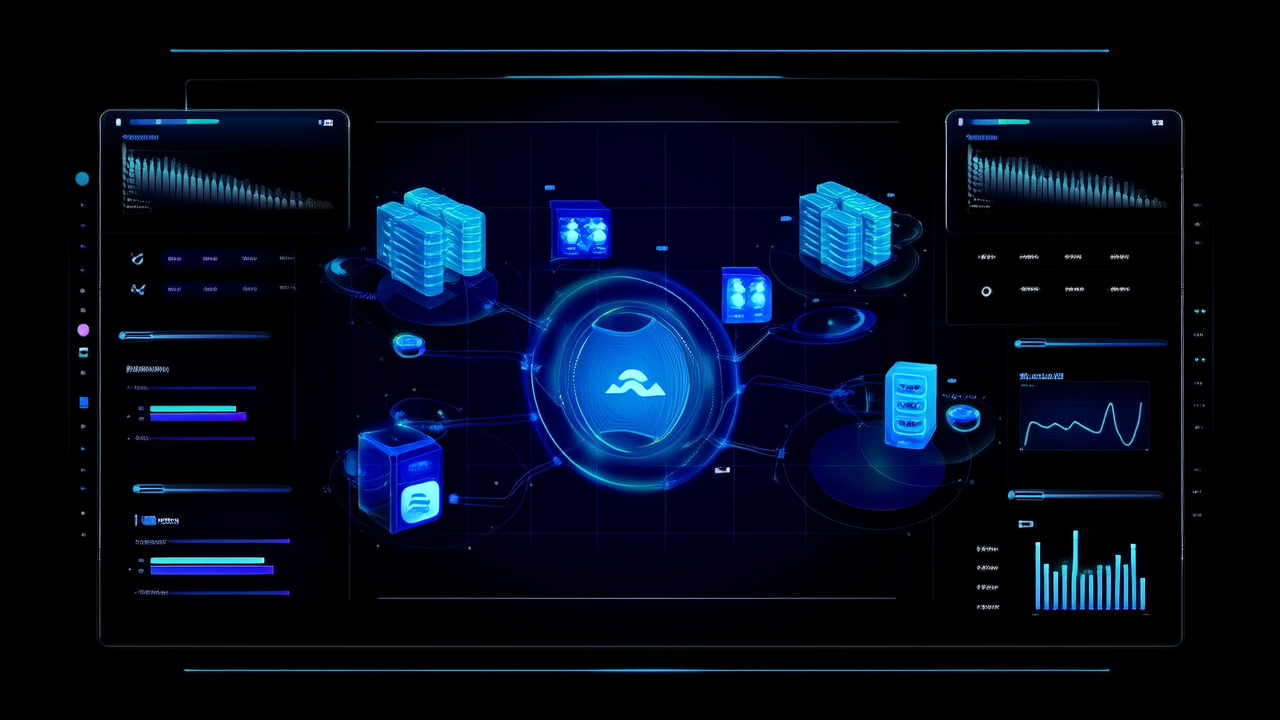
What Is DevOps Automation Hub?
DevOps Automation Hub is a purpose-built AI agent skill framework that unifies pipeline triggers, security validation, and artifact archival into a single coordinated workflow—reducing manual handoffs and configuration drift across toolchains. It is not a standalone platform or CLI tool; it’s an agent-enabled coordination layer built for teams already using GitHub, n8n, NAS storage, and supply-chain-aware security review practices. At its core, the Hub relies on three interoperable AI skills: Reef n8n Automation to orchestrate cross-tool events, Dji Backup to version and archive build artifacts and logs, and SlowMist Agent Security to validate pipeline components before deployment.
This is how modern DevOps teams automate with precision—not by replacing tools, but by letting AI agents observe, interpret, and act across them. Each skill handles a distinct responsibility: one routes signals, one preserves state, and one enforces trust boundaries. Together, they form a repeatable, auditable automation contract.
Explore the Automated CI/CD Pipeline Orchestration and Artifact Backup for DevOps Teams use case.
Why Manual Pipeline Coordination Fails at Scale
Engineering teams routinely face three recurring pain points:
- Trigger sprawl: A GitHub PR opens → Jenkins starts build → Slack pings → Terraform applies → manual approval required → artifact uploaded to S3 → log rotation forgotten
- Security gaps: Third-party GitHub Actions or MCP plugins are added without vetting; no automated check confirms provenance, signing, or vulnerability history
- Artifact fragility: Build outputs (Docker images, binaries, debug logs) live transiently in ephemeral runners or unversioned cloud buckets—no retention policy, no checksum verification, no rollback path
These issues compound when teams scale. A single misconfigured webhook or unchecked dependency can delay releases, trigger compliance failures, or expose credentials. Automation must be intentional, verifiable, and preserved—not just fast.
How It Works: A Real Team Workflow Step-by-Step
Let’s walk through what a mid-size SaaS team does on a typical patch release:
- A developer opens a PR in GitHub targeting
main. - The Reef n8n Automation agent detects the event, validates branch protection rules, and triggers a multi-step n8n workflow:
- Pulls latest base image from private registry
- Runs unit tests and static analysis
- On success, builds and tags Docker image with Git SHA + semantic version
- Before pushing the image, the SlowMist Agent Security agent scans all referenced GitHub Actions, npm packages, and MCP plugin manifests in the pipeline config—flagging unsigned commits, unmaintained repos, or known CVEs.
- Once cleared, the image and full build log bundle are sent to the Dji Backup agent, which copies them to a timestamped, immutable folder on the team’s Synology NAS (e.g.,
/backups/ci/2024-06-12T14:22:05Z/). Each folder includes SHA256SUMS and a manifest.json listing every file and its origin. - Finally, the n8n workflow deploys only if both security validation passes and backup confirmation is received.
No human approves the deploy step. No engineer manually verifies logs. Every action leaves an auditable trace—and every failure surfaces context, not just error codes.
Practical tip: Start small—automate one critical handoff first (e.g., “GitHub PR → backup logs → notify channel”). Measure mean time to recovery (MTTR) before and after. That metric reveals more than any dashboard.
Key Skills Powering the Hub
Each skill serves a precise role in the automation chain. They’re designed to interoperate—not compete.
- Reef n8n Automation: Provides 2,061 prebuilt, customizable n8n templates for triggers (webhooks, cron, Git events), actions (Docker, Kubernetes, Slack), error handling (retry, fallback, alert), and multi-step sequencing. Score: 2.9/20 — reflects breadth over polish, ideal for rapid prototyping.
- Dji Backup: Though named for DJI camera workflows, its core logic—incremental, versioned, checksummed copying to NAS with folder naming conventions—is directly reusable for CI artifacts. It treats logs, binaries, and configs as first-class archived assets. Score: 2.9/20 — prioritizes reliability and simplicity over UI flair.
- SlowMist Agent Security: Performs layered checks: skill/MCP installation safety, GitHub repo health (stargazers, last commit, CODEOWNERS), document/URL reputation, and on-chain address risk scoring. Score: 3.6/20 — highest among the three, reflecting its depth in threat modeling and supply-chain hygiene.
FAQ: Your Questions Answered
How does DevOps Automation Hub differ from traditional CI/CD platforms?
It doesn’t replace Jenkins, GitHub Actions, or GitLab CI. Instead, it adds AI-coordinated supervision across them—enforcing consistency where those tools assume homogeneity.
Do I need to migrate my existing pipelines?
No. The Hub works via webhooks, API calls, and filesystem watches. You keep your current runner infrastructure and CI config. The agents augment—not overwrite—your stack.
Can I use only one of the three skills?
Yes—but you lose the closed-loop guarantee. For example, using only Reef n8n Automation gives orchestration without security or backup. Using all three ensures that every successful deploy has a verified artifact and a clean security posture.
What infrastructure do I need to run this?
- An n8n instance (self-hosted or cloud)
- A NAS with SMB/NFS access (Synology, QNAP, TrueNAS)
- GitHub org with admin webhooks enabled
- Optional: SlowMist API key (free tier available)
Why This Approach Reduces Risk—Not Just Effort
Configuration drift isn’t caused by negligence—it’s baked into how most teams operate. Developers optimize for speed. Ops teams optimize for stability. Security teams optimize for compliance. Without a shared automation contract, those goals conflict.
The DevOps Automation Hub forces alignment by making each phase observable, testable, and reversible:
- Triggers are codified in n8n—not scattered across GitHub settings, Jenkins jobs, and Slack apps
- Artifacts are backed up before deployment—not “somewhere” after the fact
- Security checks happen in the pipeline, not in a separate audit sprint
That’s not convenience. It’s continuity.
Find more AI agent skills at BytesAgain.