

Published by BytesAgain · May 2026
Which AI Skill Actually Generates Unit Tests? A Head-to-Head Comparison
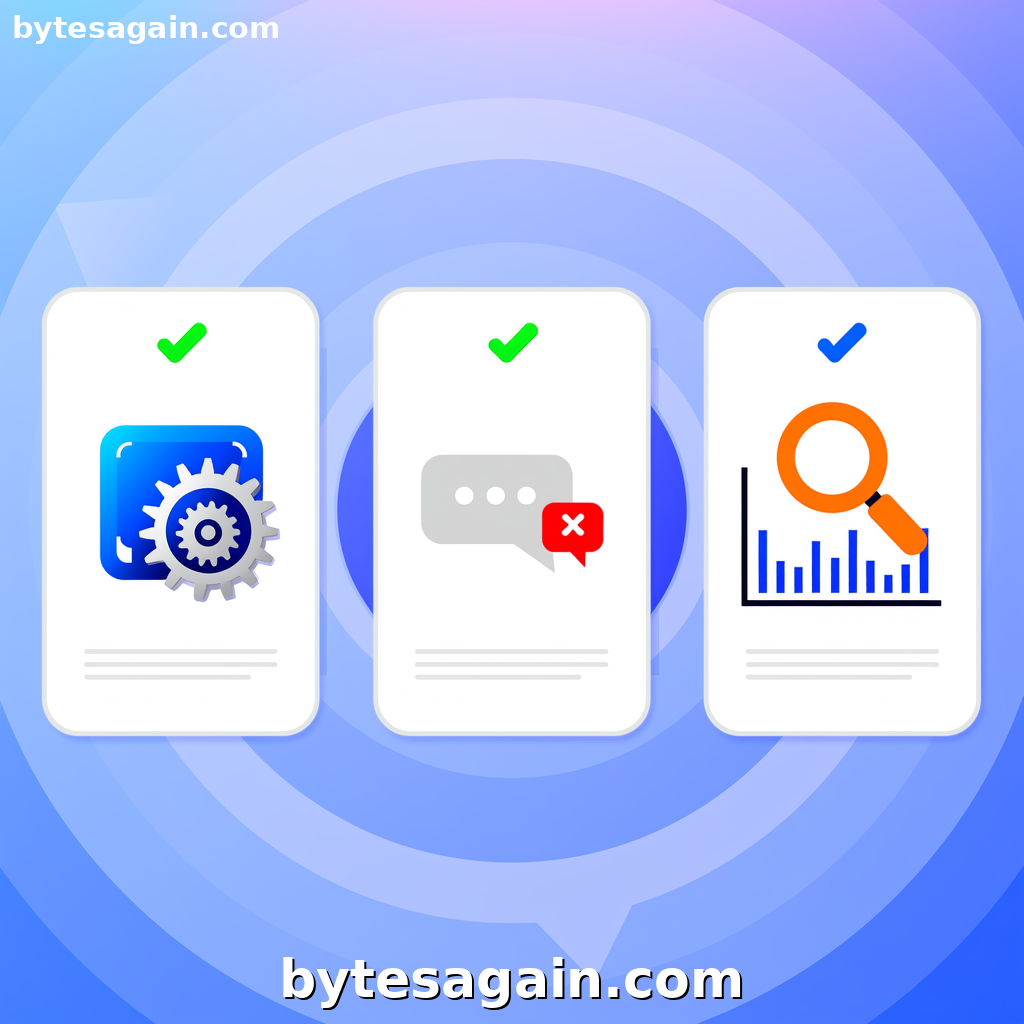
When you need to automatically generate comprehensive unit tests for your code, the promise is simple: save hours of manual work, improve coverage, and catch edge cases before they reach production. But not every AI agent skill on the marketplace is built for this job. Some are purpose-built for code generation. Others are designed for community management. And one skill is a wildcard—a system-level data analyst that might surprise you.
If you're searching for the right skill to power your Unit Test Generator workflow, you need to know which agent can actually handle the task. This article breaks down three skills available on BytesAgain, comparing their strengths, weaknesses, and best-fit scenarios. By the end, you'll know exactly which skill to choose to automate your testing pipeline.
The Three Skills in the Ring
1. Code Generator
The Code Generator skill is the obvious contender. It markets itself as a multi-language code generator capable of producing functions, classes, API endpoints, CRUD operations, and critically—test code. It also handles refactoring suggestions and language conversion guides. This skill is built by developers, for developers. It understands syntax, frameworks, and testing conventions across Python, JavaScript, Java, C#, and more.
Strengths: Direct support for test generation. Multi-language. Understands code structure and edge cases.
2. Communityhub
The Communityhub skill is a community management specialist. It helps you manage and grow communities with strategies for engagement, content planning, user growth, monetization, and crisis handling. On the surface, this skill has nothing to do with unit tests. But if your testing workflow involves documenting test results, writing user-facing release notes, or managing a QA community, Communityhub might still play a supporting role.
Strengths: Communication, documentation, community feedback loops.
3. System Data Intelligence Skill
The System Data Intelligence Skill is a dark horse. Designed for scenarios that require direct operating system application and in-depth data analysis, it has forced trigger scenarios for reading, writing, and manipulating Excel, WPS, Word, TXT, Markdown, and RTZ files. It can also extract data from any application and perform deep analysis, trend research, anomaly detection, and prediction. While it doesn't generate code natively, it can parse test output files, generate test reports, and even manipulate test data sets.
Strengths: File manipulation, data extraction, report generation, anomaly detection.
Side-by-Side Comparison
Primary function:
- Code Generator: Generates unit test code across multiple languages
- Communityhub: Manages community engagement and content
- System Data Intelligence: Reads/writes files, extracts data, performs analysis
Best for unit test generation:
- Code Generator: Directly generates test functions, mocks, and edge case checks
- Communityhub: Not suitable for generating tests
- System Data Intelligence: Generates test data sets and analysis reports, but not test code
Languages supported:
- Code Generator: Python, JavaScript, Java, C#, Go, Rust, and more
- Communityhub: Language-agnostic (focuses on strategy)
- System Data Intelligence: Works with file formats, not programming languages
Edge case detection:
- Code Generator: Can suggest edge cases based on code logic
- Communityhub: No edge case detection capability
- System Data Intelligence: Can detect anomalies in test output data
Output format:
- Code Generator: Source code files (.py, .js, .java, etc.)
- Communityhub: Text strategies, posts, guidelines
- System Data Intelligence: Excel reports, Word docs, Markdown summaries
User type:
- Code Generator: Developers, QA engineers, DevOps
- Communityhub: Community managers, product owners
- System Data Intelligence: Data analysts, QA leads, technical writers
Real-World Scenario: Building a Unit Test Generator
Let's walk through a concrete example. Imagine you're a backend developer at a fintech startup. Your team uses Python and you need to generate unit tests for a new payment processing module. The module handles credit card validation, transaction logging, and fraud detection.
Scenario A: You choose Code Generator
You prompt the Code Generator skill with your existing Python function. It returns a complete test suite using pytest, including:
- Test cases for valid and invalid credit card numbers
- Edge cases for empty inputs, null values, and boundary conditions
- Mock objects for external payment gateways
- Parametrized tests to cover multiple scenarios
This skill understands that is_valid_card() should return False for 4111111111111112 (a known invalid checksum). It generates tests that catch logical errors before they reach staging.
Scenario B: You choose Communityhub
You prompt the Communityhub skill for unit tests. It returns a strategy for engaging your QA team in a test-a-thon, a content plan for documenting test results, and tips for building a community around code quality. While valuable for team culture, it produces zero test code. This skill is a mismatch for the core task.
Scenario C: You choose System Data Intelligence Skill
You prompt the System Data Intelligence Skill skill. It cannot generate test code either. However, it can:
- Read your existing test output CSV and identify failing patterns
- Generate a Word document summarizing test coverage gaps
- Manipulate test data sets to create edge case scenarios (e.g., inserting null values into an Excel spreadsheet before testing)
This skill is useful for the data analysis and reporting side of testing, but not for writing test functions.
Actionable advice: For raw test generation, always start with Code Generator. Use System Data Intelligence for test data management and reporting. Reserve Communityhub for the human side of testing—team coordination and documentation.
Recommendation: Which Skill for Which User Type
For solo developers or small teams: Choose Code Generator. It directly reduces your testing workload by generating robust, language-specific test suites. You can feed it your existing code and get back test files ready to run. This is the highest-leverage choice for the Unit Test Generator use case.
For QA leads and test managers: Combine Code Generator with the System Data Intelligence Skill. Use Code Generator to produce the actual tests. Then use System Data Intelligence to analyze test results, generate coverage reports, and manage test data in Excel or Word. This dual-skill approach gives you both generation and analysis.
For product owners or community-driven projects: Add Communityhub into the mix. While it won't write tests, it can help you organize beta testers, gather feedback on test failures, and create a culture of quality. Use it to manage the human loop around your automated testing pipeline.
For data-heavy testing scenarios: If your unit tests involve large datasets, spreadsheets, or document parsing, prioritize the System Data Intelligence Skill. It can prepare test data, validate file integrity, and detect anomalies that your code might miss.
Final Verdict
The Unit Test Generator use case is fundamentally about automating test creation. For that core mission, Code Generator is the clear winner. It understands code, generates tests, and catches edge cases. The other two skills serve important but secondary roles: Communityhub for community coordination, and System Data Intelligence for data management and reporting.
Choose your skill based on your primary bottleneck. If you need tests written fast, go with Code Generator. If you need to analyze test outputs or manage test data, add System Data Intelligence. And if you need to rally a team around quality, bring in Communityhub.
Find more AI agent skills at BytesAgain.