

Whale Wallet Tracker: Which AI Skill Spots Market Moves First?
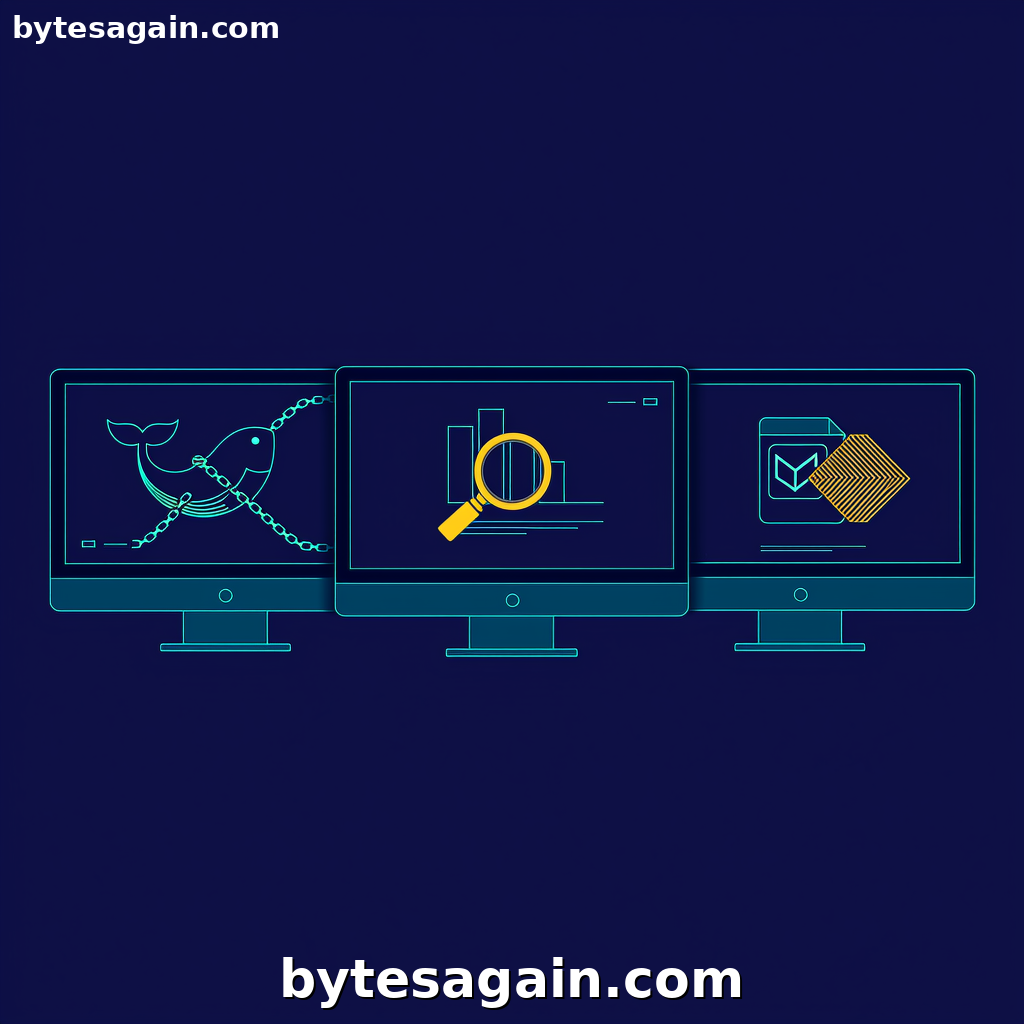
Every crypto trader has felt the sting: a massive Bitcoin transfer hits the news, you scramble to react, and the price has already moved. The window between a whale's wallet activity and mainstream coverage is often minutes—sometimes seconds. This is where an AI agent, equipped with the right skill, can automate the detection of large wallet movements to give you a real edge.
The Whale Wallet Tracker use case exists to solve exactly this problem: spotting early market signals by monitoring on-chain activity before it reaches Twitter or CoinDesk. But which skill should you equip your agent with? Three options exist on the BytesAgain marketplace, and each serves a different purpose. This article compares Crypto Whale Tracker, Data Analysis, and Wallet Tracker to help you choose the right tool for your trading workflow.
The Three Skills at a Glance
Crypto Whale Tracker: The Blockchain Reference
The Crypto Whale Tracker skill functions as a specialized reference tool. It covers blockchain and crypto fundamentals with a focus on whale activity—introductory concepts, quickstart guides, and pattern recognition. Think of it as an on-chain encyclopedia that your AI agent can consult when it needs to understand what constitutes "whale-like" behavior or how to interpret a large transaction.
Strengths: Deep domain knowledge, pattern recognition, educational context. Ideal for agents that need to explain why a movement matters.
Data Analysis: The Numbers Engine
The Data Analysis skill is a broad-spectrum tool for querying databases, generating reports, automating spreadsheets, and turning raw data into visual insights. It excels at processing large datasets and identifying statistical outliers—exactly what you need when scanning thousands of wallet transactions for anomalies.
Strengths: Statistical rigor, visualization, automation of repetitive data tasks. Best for agents that need to crunch numbers and produce reports.
Wallet Tracker: The On-Chain Detective
The Wallet Tracker skill is laser-focused on crypto wallet analytics. It covers address formats, on-chain analytics, transaction tracing, hardware wallet identification, and approval revocation. This skill gives your agent the ability to follow money trails, identify exchange deposits, and flag suspicious address patterns.
Strengths: Transaction-level tracing, address intelligence, security analysis. Perfect for agents that need to track specific wallets across chains.
Side-by-Side Comparison
What Each Skill Does Best
- Crypto Whale Tracker answers "what does this signal mean?" It provides context and pattern recognition for whale behavior.
- Data Analysis answers "what are the statistics?" It processes raw transaction data into meaningful metrics and visualizations.
- Wallet Tracker answers "where did this money come from?" It traces individual wallet activity and identifies address relationships.
When to Use Each
- Use Crypto Whale Tracker when your agent needs to interpret a detected movement. For example, if a wallet moves 5,000 ETH to a known exchange, this skill can explain whether that's a typical whale pattern or an anomaly.
- Use Data Analysis when you need to scan thousands of wallets for unusual activity. This skill can run statistical models to detect when a wallet's transaction volume exceeds three standard deviations from its historical mean.
- Use Wallet Tracker when you need to follow a specific address or set of addresses. This skill can trace transactions through multiple hops, identify if funds are heading to a mixer, or flag addresses associated with known entities.
Coverage Overlaps and Gaps
All three skills touch on blockchain data, but they operate at different layers. Crypto Whale Tracker provides the conceptual framework. Data Analysis provides the quantitative engine. Wallet Tracker provides the forensic detail. No single skill covers all three completely.
The gap is in real-time alerting logic. None of these skills natively include a cron job or webhook system. You'll need to pair your chosen skill with an agent workflow that polls blockchain data or listens to mempool events.
Real-World Scenario: The $50 Million ETH Transfer
Imagine a user named Alex who wants to monitor the top 100 Ethereum wallets for large outflows. Here's how each skill would handle the task:
Scenario A: Alex uses Crypto Whale Tracker only. The agent can explain that a 50,000 ETH transfer to Binance is a bearish signal based on historical patterns. But Alex still needs to manually fetch the data—the skill doesn't query the blockchain itself.
Scenario B: Alex uses Data Analysis only. The agent can process a CSV of recent whale transactions, generate a chart showing outflow trends over the past 24 hours, and highlight that this transfer is the largest in the dataset. But it can't tell Alex whether the destination address is an exchange or a personal wallet.
Scenario C: Alex uses Wallet Tracker only. The agent can trace the 50,000 ETH from the whale wallet through three intermediate addresses and confirm it landed on a Binance deposit address. But it can't automatically compare this transaction to historical whale patterns or generate a statistical report.
Best Recommendation: Combine Wallet Tracker for address tracing with Data Analysis for statistical context. Use Crypto Whale Tracker as a reference layer to interpret the combined output.
Actionable Advice: For a production-grade whale watcher, pair Wallet Tracker with Data Analysis. Use Wallet Tracker to identify and trace transactions, then feed the results into Data Analysis to generate automated alerts based on statistical thresholds. Add Crypto Whale Tracker as a fallback reference for pattern interpretation.
Which Skill for Which User Type?
For the Casual Trader
If you want occasional alerts about big Bitcoin movements and don't need deep analytics, start with Crypto Whale Tracker. It provides enough context to understand basic whale patterns without overwhelming you with technical detail.
For the Data-Driven Analyst
If you run a trading desk or manage a portfolio, Data Analysis is your primary tool. It allows your agent to process large datasets, run regressions on whale activity versus price action, and generate daily reports.
For the On-Chain Investigator
If you track specific wallets—whether for security, compliance, or competitive intelligence—Wallet Tracker is essential. It gives your agent the ability to trace transactions across chains and identify address clusters.
For the Power User
The most effective setup combines Wallet Tracker and Data Analysis. Wallet Tracker handles the raw transaction tracing, while Data Analysis converts that data into actionable signals. Add Crypto Whale Tracker as a reference skill for pattern interpretation when the agent encounters unfamiliar activity.
Final Recommendation
No single skill covers the entire whale tracking workflow. The choice depends on your specific need:
- Need to understand whale patterns? Choose Crypto Whale Tracker.
- Need to crunch numbers and spot outliers? Choose Data Analysis.
- Need to trace specific wallets and follow money? Choose Wallet Tracker.
- Need a complete solution? Combine Wallet Tracker and Data Analysis as your core, with Crypto Whale Tracker as a reference layer.
The Whale Wallet Tracker use case provides the perfect testing ground. Start with one skill, experiment with your agent's outputs, and add complementary skills as your tracking needs grow.
Find more AI agent skills at BytesAgain.
Published by BytesAgain · May 2026