
Job Hunting & Career Stack is a structured, AI-augmented workflow that unifies self-assessment, role targeting, application orchestration, and progress tracking into one auditable system. It replaces résumé blasting with intentional, personality-aligned career advancement—using AI agents to automate repetitive tasks, surface high-fit opportunities, and maintain momentum across the full job search lifecycle. At its core, this stack treats career development not as a series of isolated events but as an operational discipline: one where every skill, agent, and automation decision serves measurable alignment and execution fidelity.
Why Traditional Job Search Fails (and What Replaces It)
Most job seekers operate in reactive mode: scanning boards, tweaking résumés per listing, sending applications without consistency or follow-up, and losing track of deadlines or interview stages. This leads to fatigue, misaligned roles, and low response rates—not because candidates lack qualifications, but because their process lacks structure and self-awareness.
The Job Hunting & Career Stack fixes this by embedding two foundational AI agents into daily workflow:
- Self-knowledge before search: Understanding cognitive preferences helps avoid cultural mismatches and unsustainable work environments.
- Execution integrity after discovery: Automating reminders, status updates, and portfolio syncs ensures no opportunity slips through cracks—even during high-volume outreach.
Explore the AI-Powered Career Alignment Engine for Targeted Job Search & Application Operations use case to see how this integration works end-to-end.
MBTI-Guru: Matching Personality to Role Fit
The Mbti Guru skill delivers more than a four-letter type. It administers validated MBTI assessments across four versions (self-report, observer-rated, situational, and adaptive), then analyzes all four dimensions—Extraversion/Introversion, Sensing/Intuition, Thinking/Feeling, Judging/Perceiving—to generate bilingual career reports. These reports include:
- Role clusters ranked by cognitive fit (e.g., “INTJ: High alignment with systems architecture, strategic consulting, and R&D leadership”)
- Culture indicators (e.g., “ENFPs thrive in flat hierarchies with autonomy and creative iteration—avoid rigid policy-driven environments”)
- Growth-path warnings (e.g., “ESTP may experience burnout in highly abstract, long-cycle research roles without tangible milestones”)
Unlike generic “best jobs for your type” lists, Mbti Guru cross-references your profile against real-time labor data—including company values statements, team structure signals from LinkedIn, and engineering blog tone analysis—to surface actual openings where your thinking style is an asset—not just tolerated.
Ops-Deck: Your Career Operations Dashboard
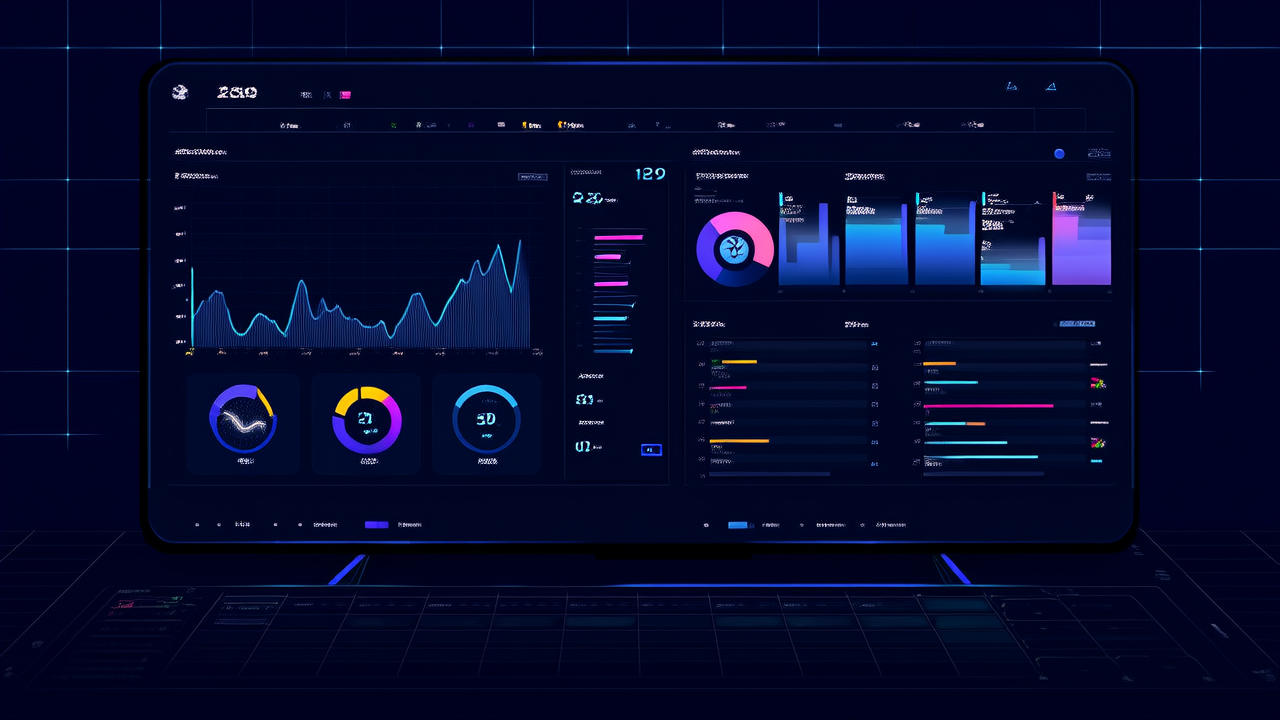
Once you’ve identified aligned roles, execution begins—and that’s where Ops Deck becomes indispensable. It is not a task manager. It’s a real-time operations dashboard built for AI agent workflows, with features tailored to career advancement:
- Cron-scheduled application cadence: Set rules like “submit 3 applications weekly on Tuesdays at 10 a.m., prioritizing roles scoring ≥85% on MBTI-Guru fit”
- Interview pipeline view: Auto-sync calendar invites, log call notes, trigger follow-up emails 24h post-interview, and flag stalled stages
- Portfolio health monitor: Detect outdated GitHub repos, stale Behance projects, or missing case study links—and auto-schedule refreshes
All activity is logged, timestamped, and exportable—so you can audit what worked, when, and why.
A Real User Workflow: From Assessment to Offer
Here’s how Maya, a frontend engineer transitioning into product design, used the stack over six weeks:
- Took the adaptive MBTI assessment via Mbti Guru; results showed strong Intuition + Feeling preference with moderate Judging—indicating high fit for user-centered, iterative design roles in mission-driven startups.
- Filtered her target list to companies whose careers pages emphasized “collaborative prototyping” and “design sprint culture”—both linguistic markers validated by Mbti Guru’s culture-matching engine.
- Configured Ops Deck to:
- Auto-submit applications every Tuesday at 10 a.m. to 3 pre-vetted roles
- Send personalized follow-ups 48h after interviews
- Refresh her Figma case studies every Friday if usage metrics dropped below 15 views/week
- Reviewed her Ops Deck dashboard weekly—spotting that 70% of responses came from companies matching her top-three culture indicators. She doubled down on those signals in cover letters.
- Received 4 interviews in Week 5—and accepted an offer at a climate-tech startup where her MBTI-Guru report had flagged “strong alignment with cross-functional empathy loops.”
“I stopped optimizing for ‘what looks good on paper’ and started optimizing for where my natural processing style solves real problems. That shift—from résumé-first to cognition-first—cut my search time in half.” — Maya, Product Designer
FAQ: How Does This Stack Handle Common Pain Points?
What if I’m unsure about my MBTI type?
Mbti Guru includes observer-rated and situational versions—so you’re not relying solely on self-perception. It also flags inconsistencies (e.g., “Your self-report says ENTP, but team feedback patterns align more closely with ENFP”) and recommends retesting after 30 days.
Can Ops Deck integrate with tools I already use?
Yes. It supports native sync with Gmail, Outlook, Google Calendar, Notion, GitHub, and Figma—no API keys required. All integrations are authenticated via OAuth and appear in the Security Audit Panel.
Is this only for tech roles?
No. The MBTI-Guru career reports cover 120+ occupational families—from clinical psychology to supply chain logistics—each mapped to real hiring signals (job description language, promotion paths, tenure data). Ops Deck’s cron logic applies equally to academic applications, freelance pipelines, or internal mobility.
Why “Career Stack” Changes the Metrics That Matter
Traditional job search success is measured in applications sent. The Career Stack measures:
- % of applications sent to roles with ≥80% cognitive fit (via Mbti Guru scoring)
- Avg. time between application and first recruiter reply (tracked in Ops Deck)
- Portfolio update latency (how fast new work appears online post-completion)
These metrics expose process quality, not just output volume. They let you adjust strategy—not just hustle harder.
Find more AI agent skills at BytesAgain.